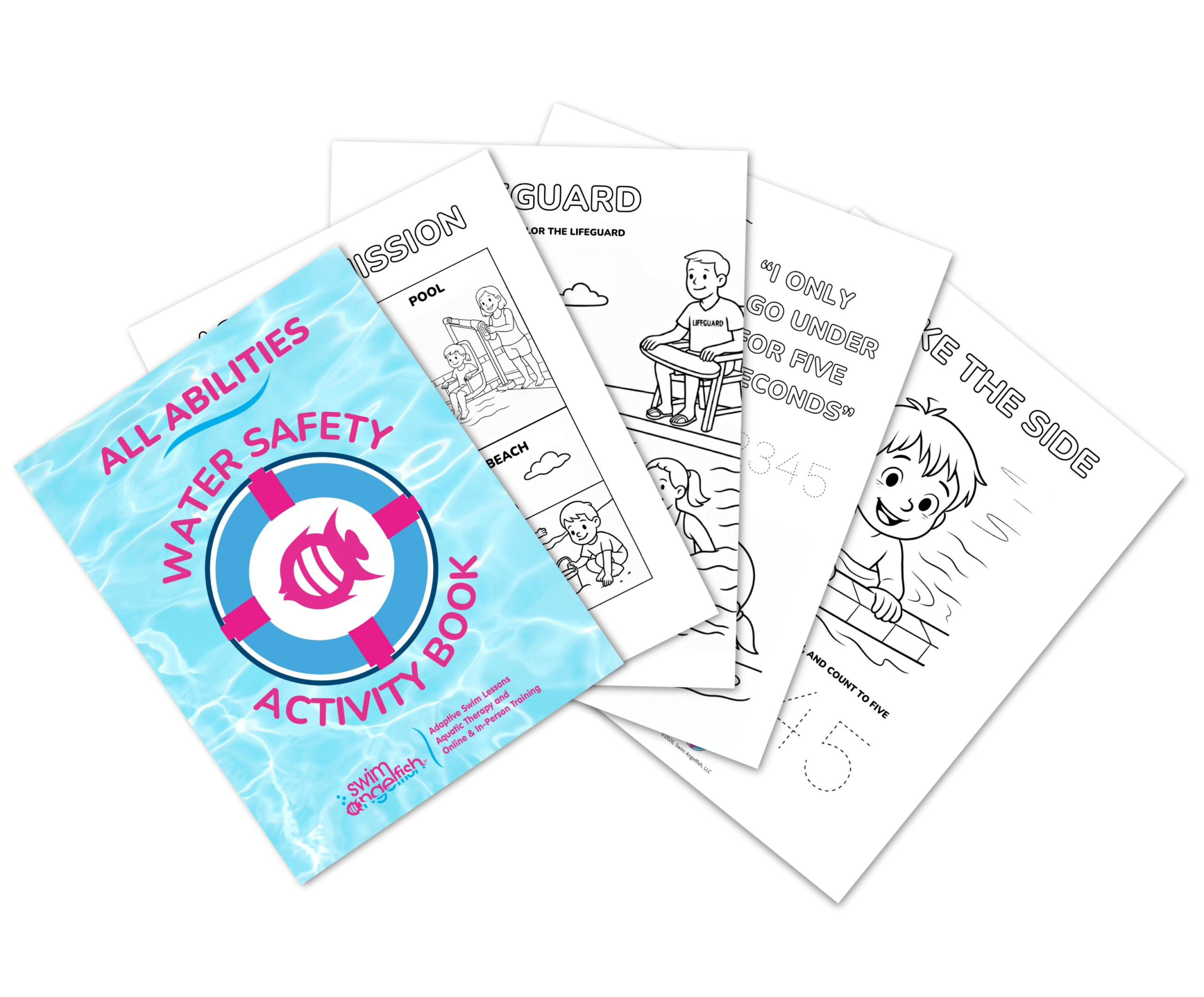
Designed for Kids of All Abilities

This book turns water safety education into engaging learning experiences.
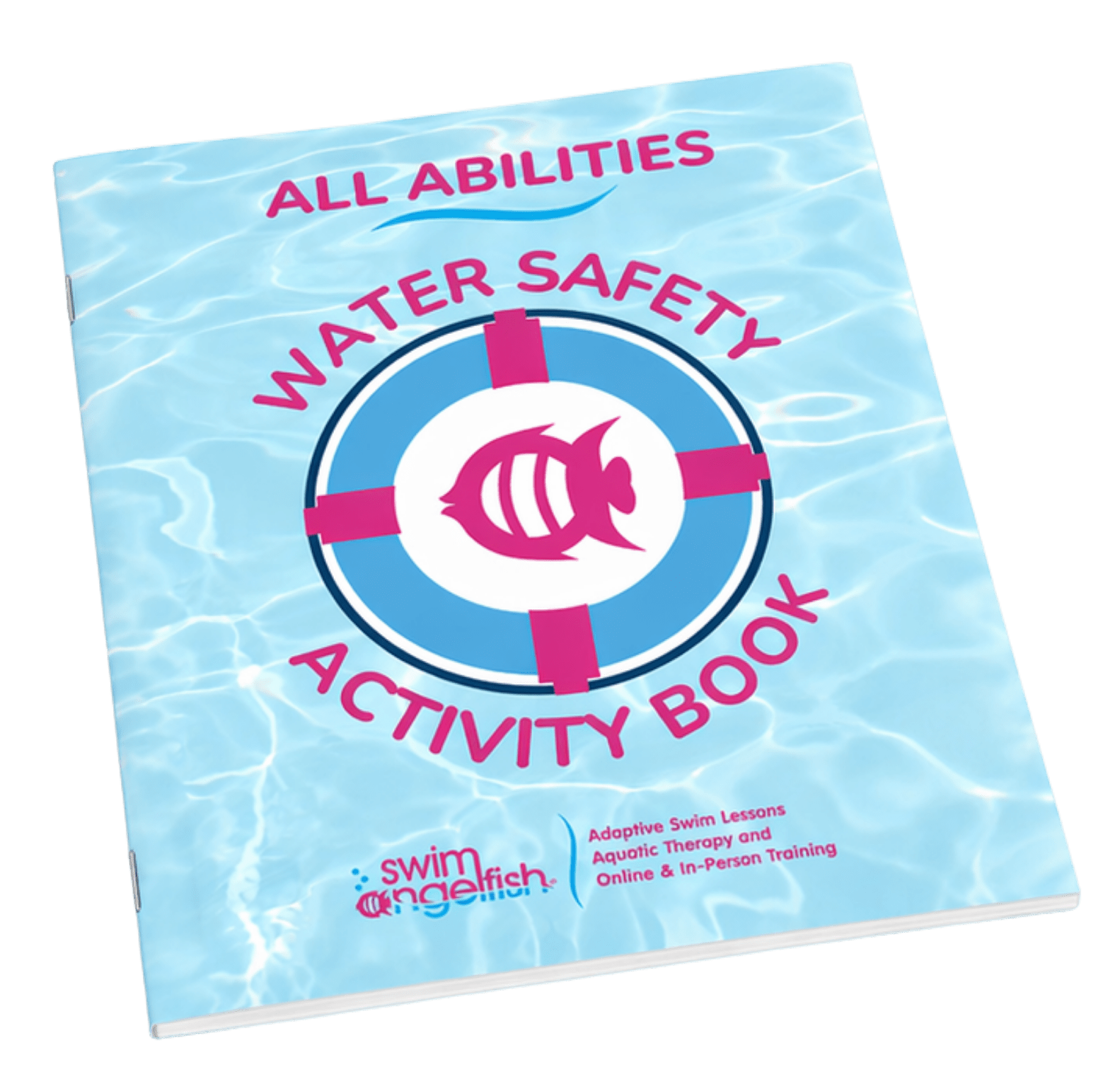
The Adaptive Water Safety Activity Book is a must-have resource for any parent, school, behavioral clinic, or swim program dedicated to helping children thrive around water.
Designed by a Physical Therapist and an Occupational Therapist, this book uses fun, interactive activities to teach life-saving water safety skills.
These activities are guided by interactive learning, a proven approach for young children to explore, practice, and develop essential life skills.
Who It’s For
Perfect for children of all abilities, aged 2–8, including those who are non-verbal, high sensory-seeking, autistic, or have ADHD, motor challenges, or physical disabilities. Each activity is carefully crafted to reinforce water safety skills, build confidence, and celebrate progress.

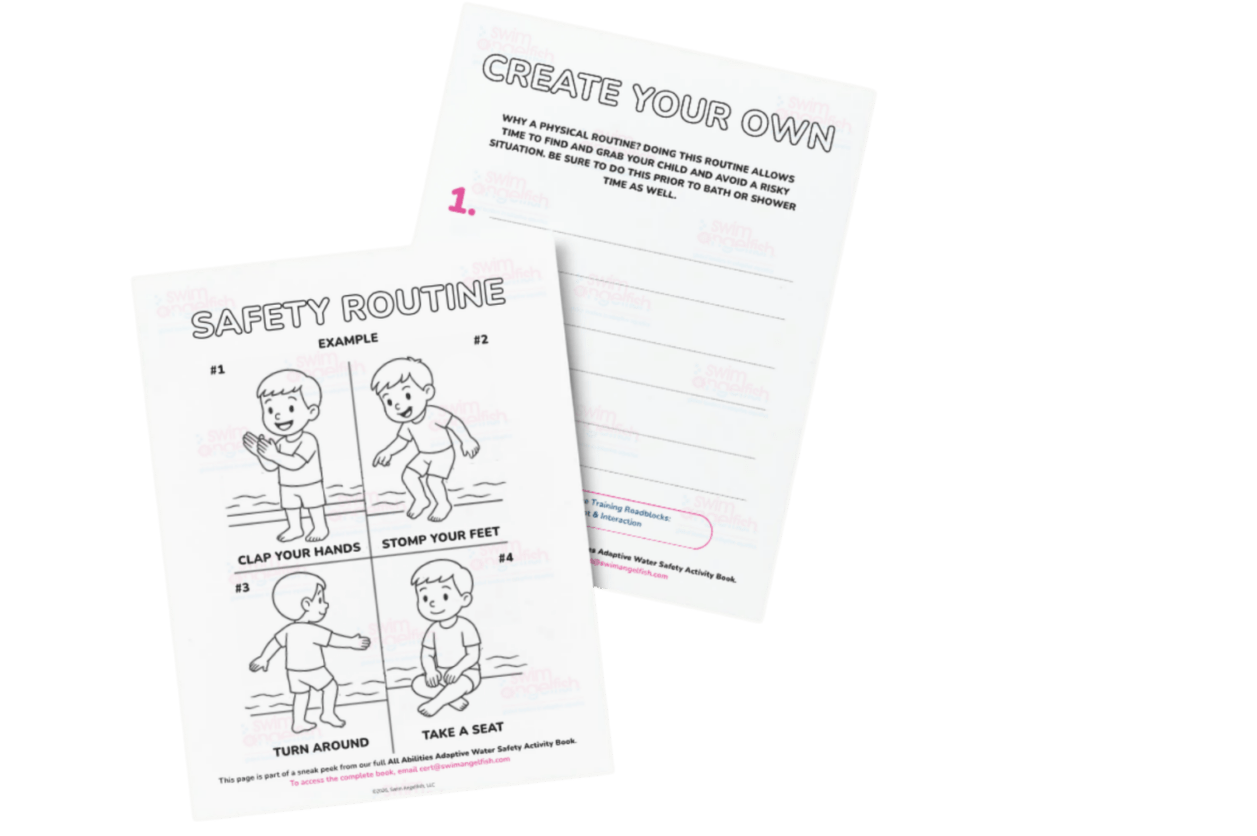
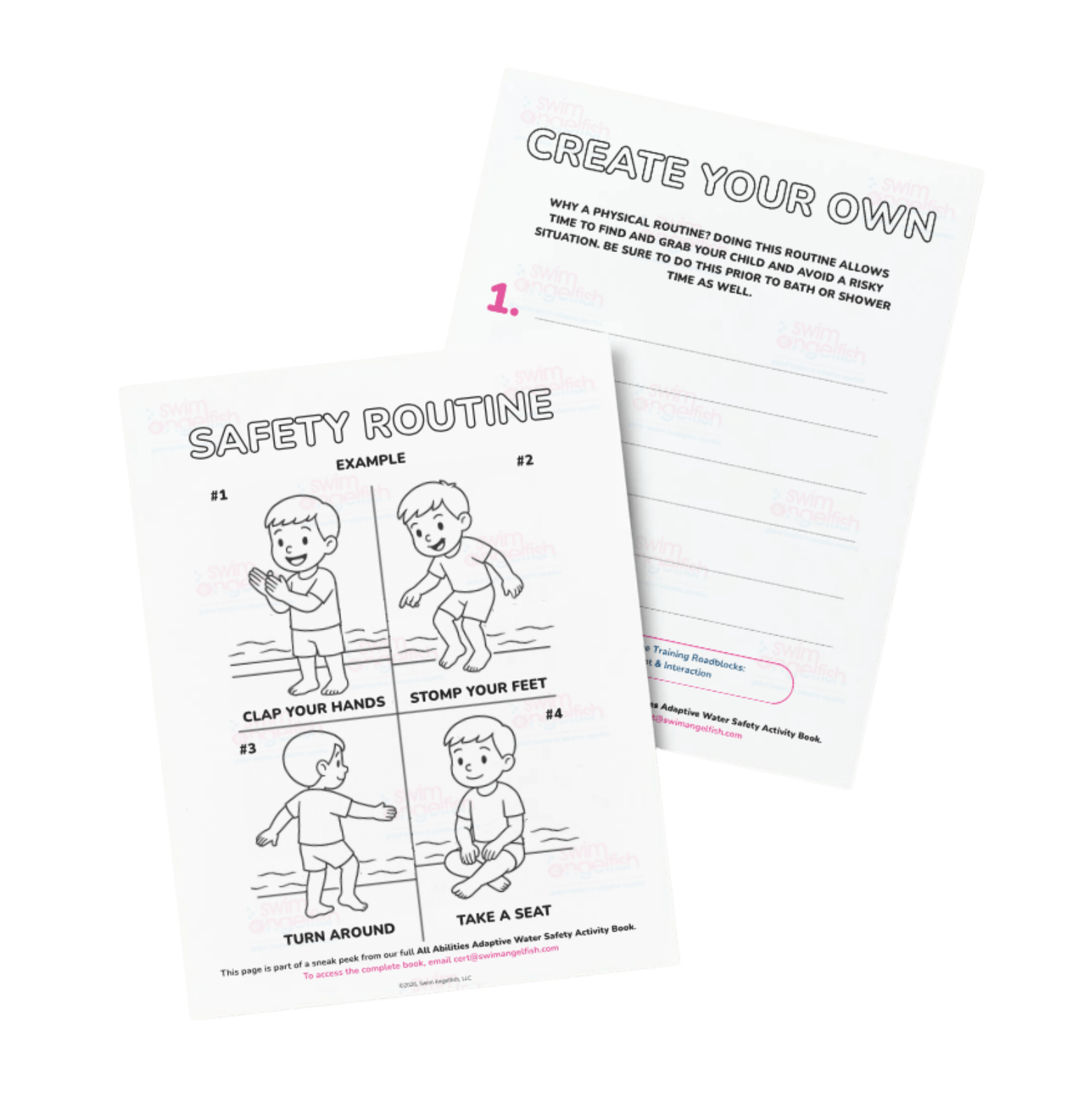
Why Choose the Adaptive Water Safety Activity Book?
Every year, drowning is a leading cause of death for children under 5, and children with autism are up to 160 times more likely to drown than their peers. Traditional resources often fall short for children with special needs, leaving a critical gap in water safety education.
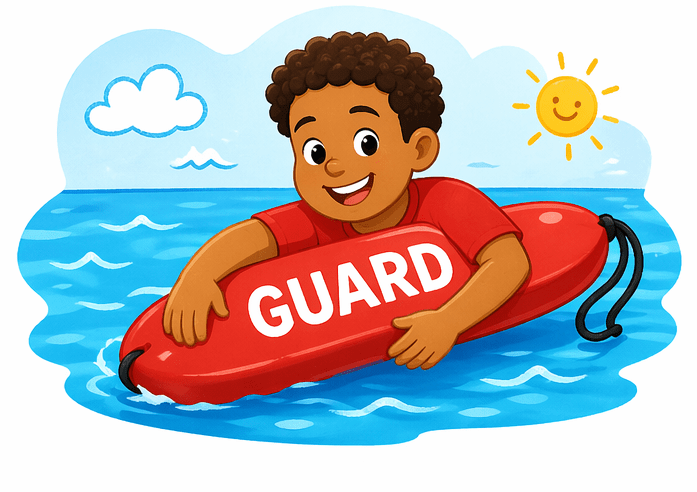
The Adaptive Water Safety Activity Book fills that gap. Designed by a Physical Therapist and an Occupational Therapist, it turns essential water safety education into interactive, playful activities that children of all abilities can understand, relate to, and enjoy.
Whether at home, in therapy, at swim school, or during water safety events, this book gives kids the tools they need to practice life-saving skills in ways that feel fun, motivating, and achievable.
This valuable tool is part of the answer to a growing need for adaptive aquatics resources that reinforce key water safety concepts taught in learn to swim lessons.
How to Use the Book to Teach Water Safety
The Adaptive Water Safety Activity Book is designed to be flexible and creative, so it can be used in a variety of settings and adapted for a wide range of behaviors.
TIP: The best way to use each activity page is for a parent or caregiver to explore it with their child and find ways to reinforce the water safety learning opportunity.


Purchase Adaptive Water Safety Activity Book
Perfect for parents, caregivers, swim instructors, therapists and behaviorists supporting water safety education.

Questions? We’ve Got You!
This is good for children ages 2 and up. It is best used with assistance from an adult, to engage in meaningful age appropriate conversation around water safety.
These activities help bridge the gap between learning on land and applying skills in the water. Practicing concepts first on land makes it easier for children to generalize those skills in real situations.
With support from parents, caregivers, swim instructors, and behaviorists, consistent water safety practice can help reduce impulsive or reactive behaviors around water.
The Adaptive Water Safety Activity Book is designed to support all children and adults, especially those who may be impulsive around water—whether or not they have a formal diagnosis.
For individuals with autism, particularly those who are strongly drawn to water, the activities provide clear, consistent strategies that can be practiced both in lessons and as part of home-based routines. The adaptable format helps reinforce safety skills in a way that is engaging, repeatable, and easy to integrate into everyday learning.
Every page in the Adaptive Water Safety Activity Book connects to real water safety skills. Instructors can use the activities to introduce concepts on land, then practice them in the water.
It’s a simple way to reinforce key skills while creating a strong connection between swim lessons and learning at home.
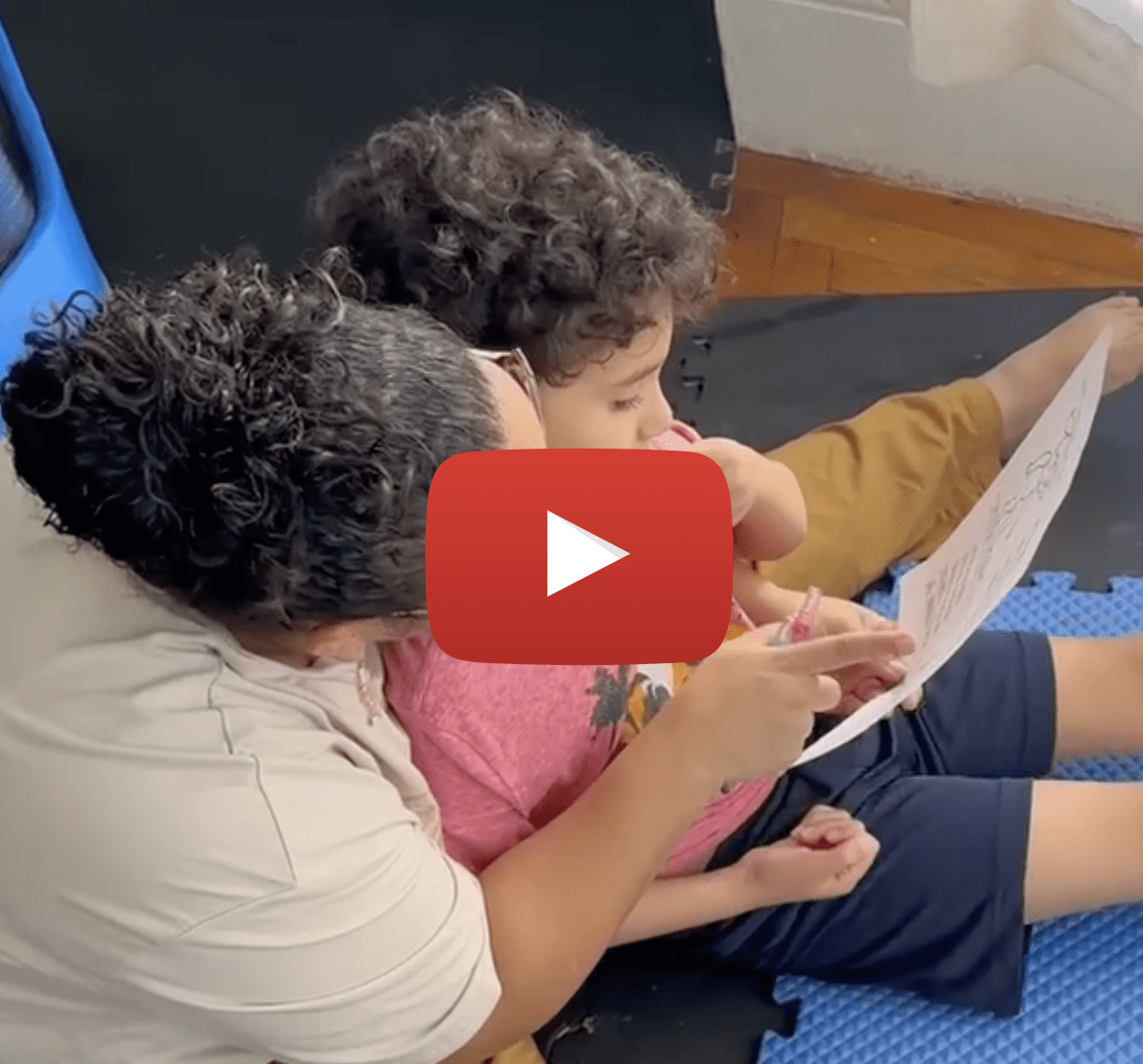
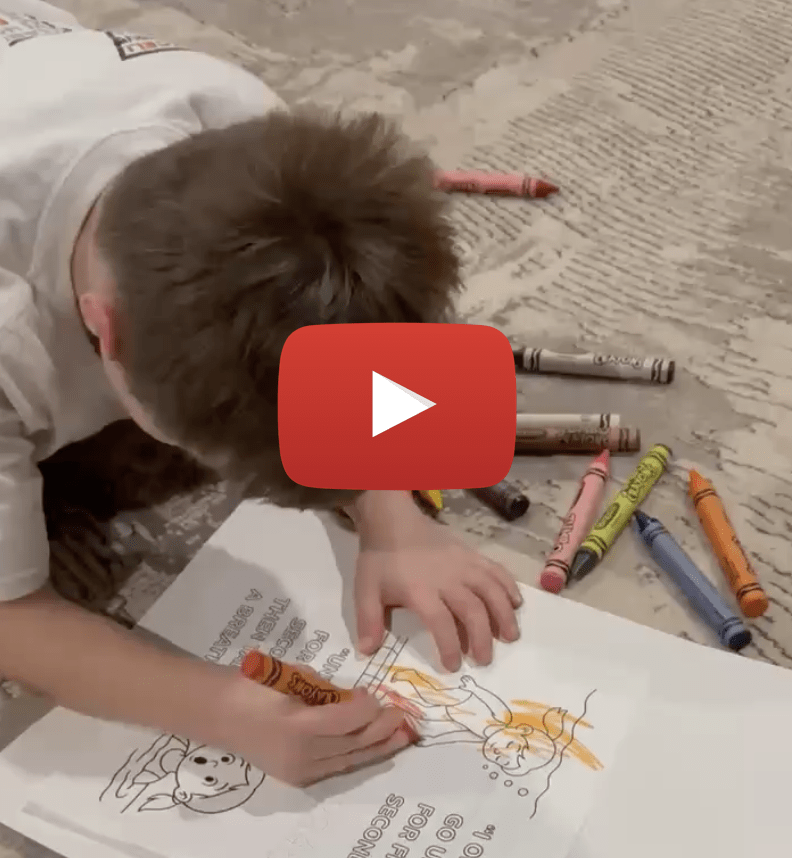
The book is designed to be interactive and flexible, so engagement can look different for every child. Families can follow along using our video playlist, which shows people of all ages and abilities using the pages in creative, practical ways.
These examples help parents and caregivers see how to turn each activity into hands-on learning, making it easier for children to stay interested and connected to water safety concepts.
Yes—these books are an excellent fit for water safety events and safety-focused swim lesson weeks. A simple and effective way to include them is:
- Share the free activity sheets with parents before the event.
- Provide parent tips to support learning and awareness.
- After the event, send participants home with the Adaptive Water Safety Activity Book.
This creates a clear learning loop where everything practiced in the water can be reviewed and reinforced at home. Families can revisit the same concepts, helping children retain skills and improving long-term water safety awareness.
Yes. Pediatric therapy clinics can use the Adaptive Water Safety Activity Book as part of therapeutic play and skill-building activities.
It provides a structured way to introduce water safety concepts while supporting attention, sensory regulation, and motor planning.
To bring this to life in the clinic, you could include a rescue tube in the sensory gym or could include this as part of a movement activity, such as an obstacle course using different pieces of swim equipment, with the last step being lying in prone and working on the activity page.
RBTs and BCBAs can incorporate the Adaptive Water Safety Activity Book into existing safety programming and skill acquisition plans as a structured, multisensory teaching tool.
It fits naturally within broader safety goals such as community safety, fire safety, and safe item identification, by using water safety as a practical and motivating context for learning. The visual, hands-on activities support repetition, generalization, and skill transfer across environments so it may be more relatable when a child is in, near or around any body of water.
Foundations can include the Adaptive Water Safety Activity Book in water safety education events and outreach programs to strengthen learning and engagement.
The book supports multisensory learning, helping participants connect concepts from land-based activities to real-world water environments.
This repetition and variety in teaching methods can improve understanding, retention, and generalization of key safety skills.
For learners with diverse or unique needs, offering multiple ways to access the same information can help reinforce water safety in a more meaningful and accessible way.