Discover how adaptive swimming and aquatic therapy can support movement, fitness, independence, water safety, and quality of life for people with spinal cord injury (SCI).
A spinal cord injury can affect movement, strength, sensation, balance, coordination, and the ability to perform everyday activities. The impact of SCI is different for every person and depends on factors such as the level and completeness of the injury, time since injury, and other individual health considerations.
The aquatic environment offers unique opportunities for people with SCI. Buoyancy reduces the effects of gravity and can make movement and exercise possible in ways that may be more difficult on land. Water can also provide resistance for strengthening and cardiovascular exercise while creating an environment for practicing movement, balance, transfers, and functional skills.
But the benefits of being in the water are not only physical. For someone whose movement has changed following a spinal cord injury, the ability to move more freely in the water can be an incredibly powerful experience. Floating, turning, changing direction, or simply moving through the water without relying on a wheelchair or other mobility equipment can create a sense of freedom that is difficult to replicate on land.
For some people, that freedom can bring unexpected joy, confidence, and a renewed sense of possibility.
Adaptive swim lessons and aquatic therapy are different services, but both can play an important role in helping people with SCI become more comfortable, capable, and independent in the water.
What is Spinal Cord Injury?
A spinal cord injury (SCI) occurs when the spinal cord is damaged, disrupting communication between the brain and the body. SCI can result from trauma, such as a motor vehicle accident or fall, or from non-traumatic causes such as a degenerative disorder or other medical conditions.
The effects of spinal cord injury vary significantly from person to person. The level and extent of the injury can affect movement, sensation, strength, balance, and other body functions.
An injury to the cervical (neck) region can affect the arms, hands, trunk, and legs and is referred to as quadriplegia since both the upper and lower extremities are affected. Injuries lower down the spinal cord may result in paraplegia, primarily affecting the lower body.
SCI can also be described as complete or incomplete, depending on how much movement and sensation remains below the level of injury.
Even when two people have injuries at the same level, their abilities and experiences can be very different. This is particularly important when planning adaptive swimming or aquatic therapy as the swimmer’s individual movement, sensation, strength, balance, endurance, goals, and medical considerations should all be taken into account to guide the approach.
Spinal Cord Injury & Water Safety
Water safety is particularly important for people with SCI because changes in strength, sensation, balance, trunk control, mobility, and endurance can affect how a person enters, moves through, and exits the water.
For a swimmer who uses a wheelchair or other mobility device, simply getting to and from the pool can also require planning. Pool accessibility, transfers, lifts, ramps, changing facilities, and appropriate assistance should all be considered as part of a safe aquatic experience.
A swimmer’s ability to independently recover from an unexpected change in position or maintain their airway may also be different after SCI. Adaptive swim instruction should therefore focus not only on learning swimming strokes, but also on practical water-safety skills appropriate to the individual’s abilities ensuring they have a way to control their body, protect their airway, and float.
Swimming can be an enjoyable form of physical activity and an important life skill for people with SCI. Adaptive swim lessons modify traditional swimming instruction to meet the individual swimmer’s needs rather than expecting the swimmer to fit a standard lesson model.
Depending on the swimmer’s abilities and goals, an adaptive swim instructor may modify body position, flotation, propulsion techniques, communication, equipment, or the way a skill is taught.
For some swimmers, the goal may be independent swimming. For others, it may be developing enough aquatic skills to participate safely with family and friends, improving confidence in the water, exercising, or learning how to manage an unexpected situation in water.
Benefits of Swim Lessons for Spinal Cord Injury
For many people with SCI, one of the most powerful aspects of being in the water is the freedom to move. Buoyancy reduces the effects of gravity, allowing swimmers to float, turn, change direction, and explore movement in ways that may be difficult to replicate on land.
For someone who relies on a wheelchair, braces, or assistance, this can feel very freeing. The pool can become a place to focus less on what their body cannot do and more on what it can do, creating opportunities for play, exploration, joy, and a renewed sense of possibility.
Adaptive swimming may help individuals with SCI:
The specific benefits and goals will depend on the individual's level of injury, abilities, health, and experience in the water.
Aquatic therapy uses the properties of water as part of a therapeutic intervention. For people with SCI, this can provide a different environment for practicing movement, strengthening, balance, endurance, mobility, and functional activities.
The buoyancy of water can reduce the amount of body weight a person needs to support, while water resistance can be used to gradually challenge movement. This combination may allow a therapist to facilitate movement or exercise that is difficult to perform on land. It is also a great way to work on symmetry in the body and correct muscle imbalance.
Aquatic therapy may be used as part of a broader rehabilitation program and can be tailored to the person’s individual goals.
For someone with SCI, those goals may include improving strength or endurance, practicing functional movement, working on balance and postural control, developing cardiovascular fitness, and working on functional goals in a gravity free environment.
While aquatic therapy may have specific clinical goals, the experience of being in the water can have benefits that extend beyond the therapy session. Being able to move with greater freedom, participate in activities that may not be possible on land, and experience success through movement can contribute to confidence, motivation, and enjoyment.
Benefits of Aquatic Therapy for Spinal Cord Injury
Depending on the individual’s needs and therapy goals, aquatic therapy may be used to work on:
Working with a swimmer or therapy client with SCI requires more than simply adapting a swimming stroke. The individual’s medical history, functional abilities, equipment, and goals should all be considered before entering the water. It is important to spend time teaching them how to control their body in the aquatic environment taking into consideration muscle tone, spasticity, motor control and strength.
Important considerations may include:
For these reasons, aquatic professionals should work within their scope of practice and coordinate with the swimmer’s healthcare team when appropriate.
Aquatic therapy should be provided by appropriately qualified professionals, particularly when addressing medical or rehabilitation goals.
Our Swim Whisperers® Adaptive Aquatics Training Program is the only Adaptive Aquatics Training program that uses a therapeutic approach to assess, identify, and overcome the roadblocks that are present in individuals with special needs while learning to swim.
Adaptive swimming helped Godlove rediscover confidence, joy and possibility after spinal cord injury. Watch his story and see the journey from uncertainty in the water to swimming independently—and then taking on adaptive surfing the very next day.
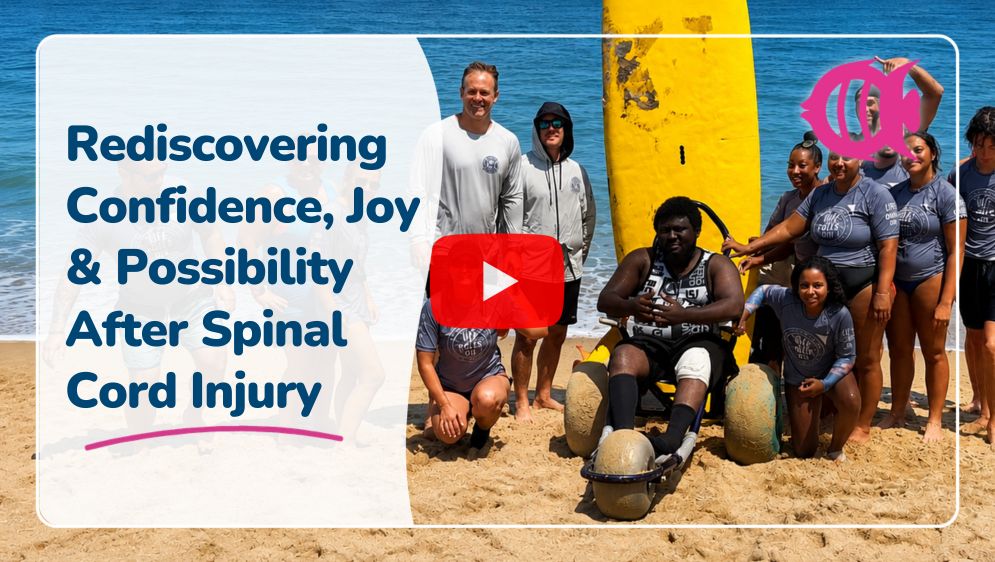
Watch more inspiring stories of these amazing swimmers with spinal cord injury.
Finding the right aquatic professional can make a significant difference for someone with SCI.
Look for an adaptive swim instructor or aquatic therapist who understands how to modify the aquatic environment, communicate with the swimmer, use appropriate equipment, and build skills around the individual’s abilities and goals.
Swim Angelfish provides adaptive aquatics education for professionals working with swimmers of different abilities and offers resources to help aquatic professionals create more inclusive and effective aquatic experiences.
We also have licensed aquatic physical, occupational and recreational therapists who will use a fun, innovative multi-sensory approach to reach specific therapy goals. We offer private, semi-private and small group sessions across multiple locations in CT, MA, NH and NY.
Working with swimmers with SCI requires an understanding of more than swimming technique. Aquatic professionals need to recognize the physical, sensory, functional, and environmental factors that can affect a swimmer’s participation and safety.
Our Swim Whisperers® Adaptive Aquatics Training Program teaches aquatic professionals how to identify and address the individual roadblocks that can make learning to swim more challenging.
Whether you work with swimmers with SCI, neurological conditions, physical disabilities, autism, or other diagnoses, adaptive aquatics training can help you develop a more individualized approach to instruction.
From blogs to videos and lots of advice in between, we have helpful resources to support you.
Adaptive Aquatics / Spinal Cord Injury-related blog
Spinal Cord Injury & Swimming Playlist
This information is intended for educational purposes and is not a substitute for individualized medical, rehabilitation, or aquatic professional guidance. People with spinal cord injury can have complex medical and functional needs. Before beginning aquatic exercise, therapy, or swimming, consult the appropriate healthcare professionals and qualified aquatic professionals to determine what is safe and appropriate for the individual.