Adaptive Swimming for Spinal Cord Injuries: Hope, Independence, and Transformation at SPINALpedia
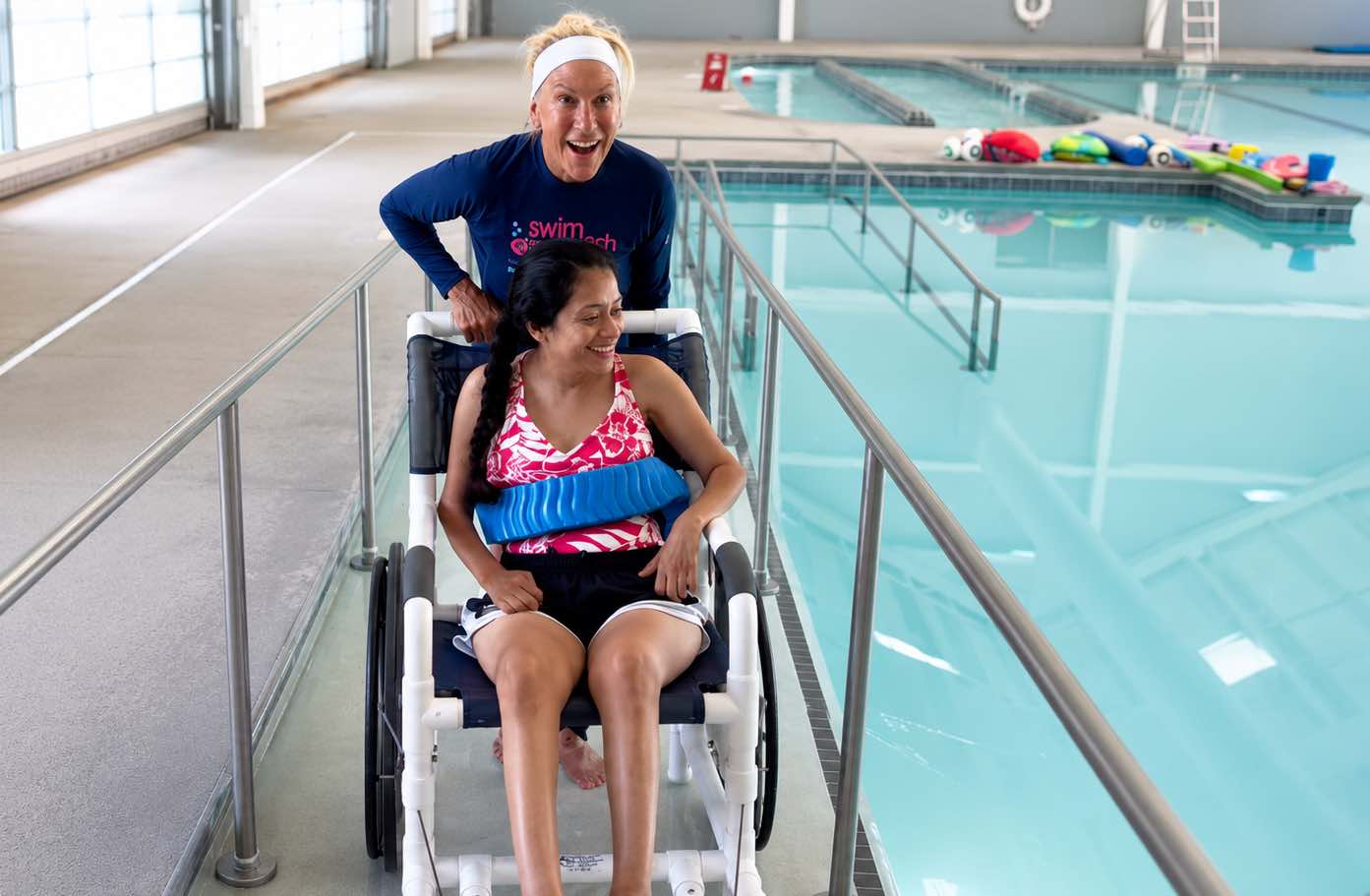
Sometimes, an experience reminds you exactly why you do what you do.
This August, Swim Angelfish had the incredible opportunity to bring adaptive swimming to a community that understands just how powerful the water can be. Through a partnership with SPINALpedia and funding from Step Into Swim, our team traveled to Virginia Beach to provide adaptive swim lessons for individuals with newly acquired spinal cord injuries.
With support from Step Into Swim, Swim Angelfish was able to provide 20 adaptive swim lessons with five members of our team to individuals who were navigating their bodies and their lives after spinal cord injury.
What happened in those lessons was about so much more than swimming.
It was about discovering what was still possible.
It was about replacing fear with confidence, uncertainty with understanding, and hesitation with greater independence in the water.
And for our team, it was a powerful reminder of exactly why we chose this work.
Bringing Adaptive Swimming to the Spinal Cord Injury Community
A newly acquired spinal cord injury can change the way a person moves through nearly every part of daily life. Things that once felt automatic may suddenly require new strategies, new equipment, and a completely different understanding of the body.
The water can create unique opportunities to explore movement because of buoyancy and the aquatic environment. But for someone who is newly navigating changes in mobility, getting into the water can also bring a lot of uncertainty.
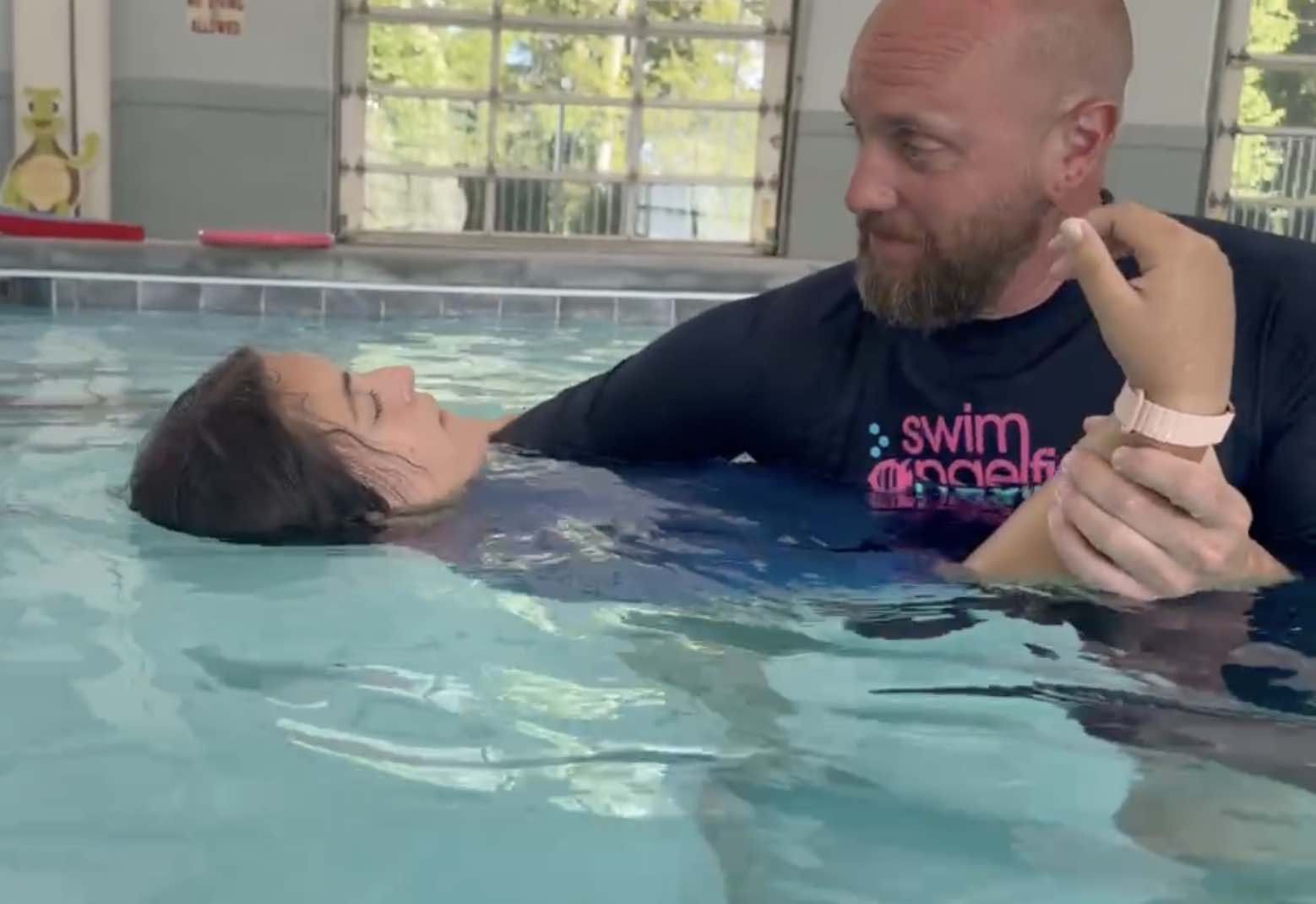
A swimmer may be wondering:
- How will my body respond in the water?
- How do I control my movements?
- What happens if I lose my balance?
- Can I safely go underwater?
- Will I ever feel comfortable in the water again?
- What kinds of aquatic activities might be possible for me?
These aren’t simply swimming questions.
They’re questions about safety, confidence, independence, and what life can look like after a life-changing injury.
That’s why individualized adaptive swim instruction matters.
At Swim Angelfish, we look beyond traditional swimming skills to understand the individual swimmer and the roadblocks that may be affecting their success in the water.
SPINALpedia: Creating Connection After Spinal Cord Injury
This experience was made possible through our partnership with SPINALpedia, an organization founded by Josh Basile.
Josh sustained a C4-5 spinal cord injury that resulted in quadriplegia. Through his own experience, he recognized the importance of connection, mentorship, and access to resources for people navigating life after spinal cord injury.
SPINALpedia has built a community connecting individuals with spinal cord injuries and their families with resources, information, and people who understand the journey.
For someone who has recently experienced a spinal cord injury, seeing another person living an active and fulfilling life can provide something incredibly powerful:
Hope for what comes next.
Our team was honored to contribute another piece to that message by helping participants discover what might be possible in the water.
From Fear and Uncertainty to Confidence in the Water
Every adaptive swim lesson looked different because every swimmer was different.
Some participants were still learning how to understand and control their bodies after their injuries. Others were working through fears surrounding submersion, balance, movement, or what might happen if they lost control in the water.
Our goal wasn’t simply to teach traditional swimming strokes.
It was to help each person discover how their body could move and function in the water.
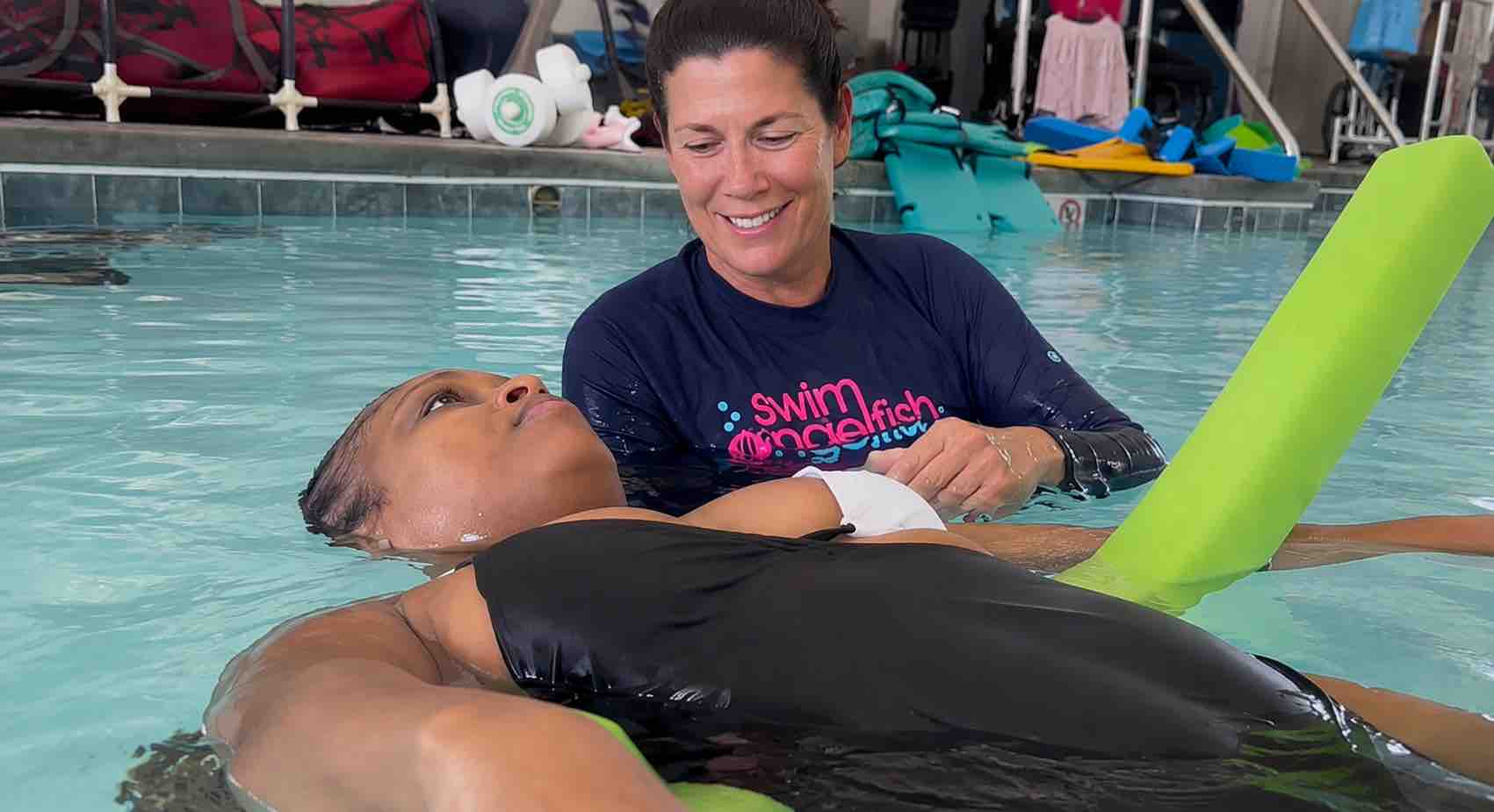
And throughout the lessons, we saw a powerful progression:
As swimmers became more comfortable in the water, we watched uncertainty begin to turn into curiosity.
Hesitation became experimentation.
And experimentation became accomplishment.
Then came the moments when swimmers did things they hadn’t imagined they could do.
Those were the moments that stopped us in our tracks.
What Can Adaptive Swimming Support After Spinal Cord Injury?
Adaptive swimming isn’t simply about teaching someone traditional strokes in a different way. Depending on the individual swimmer, their abilities, and their goals, adaptive aquatic instruction may help support:
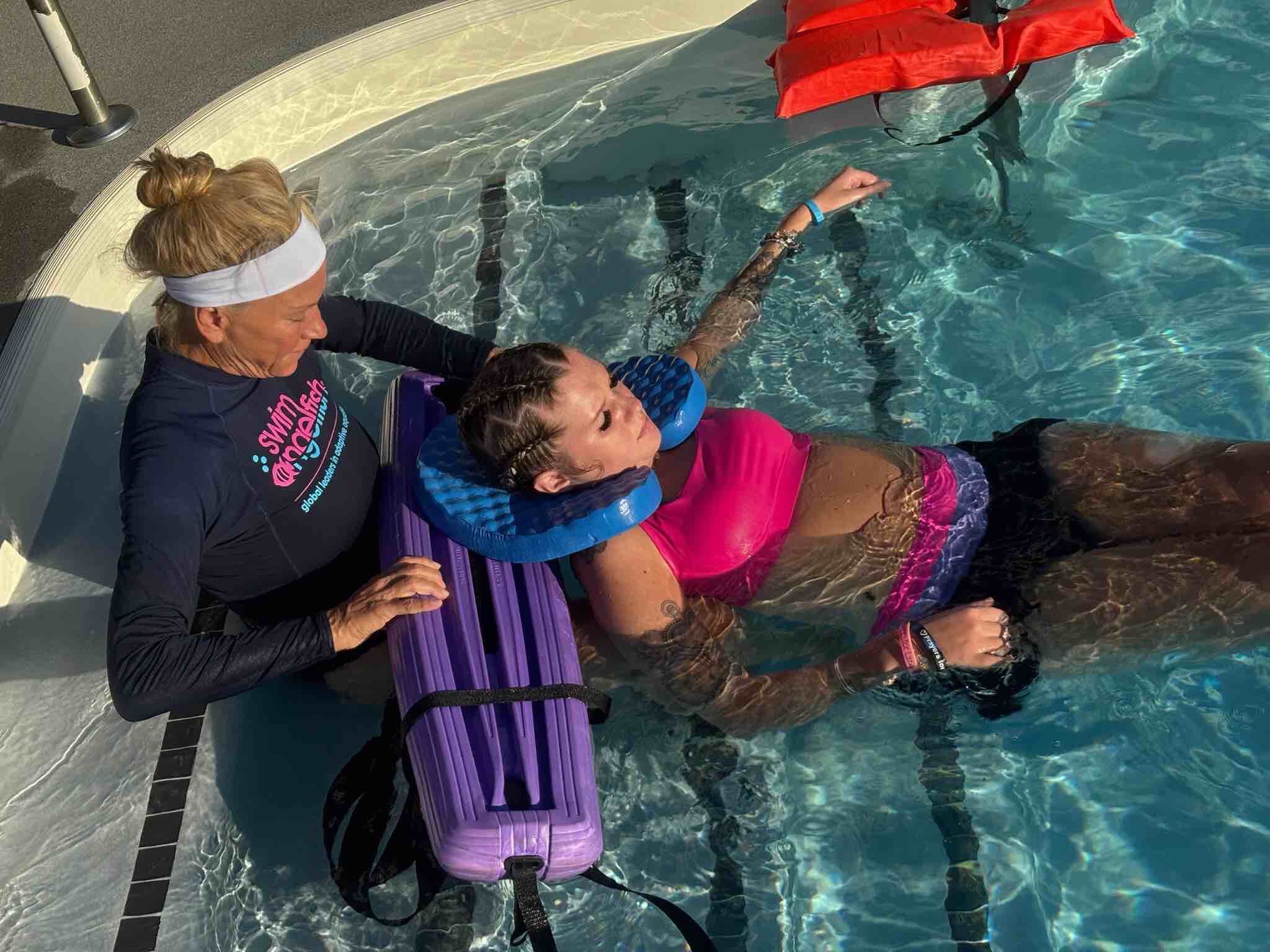
- Greater comfort and confidence in the water
- Understanding how the body responds to buoyancy
- Body awareness and control
- Safe submersion skills
- Exploring different body positions in the water
- Developing strategies for movement and transitions
- Greater independence with aquatic skills
- Confidence participating in other water-based activities
The goal isn’t to make every swimmer move the same way. It’s to identify what success looks like for each individual and find strategies that help them work toward it, whether that means becoming comfortable floating independently, learning to safely submerge, or gaining the confidence to participate in adaptive recreation.
One Swimmer’s Journey From Fear to Independence
Among the many powerful moments from our time at SPINALpedia, one story was especially meaningful to us.
Godlove, who sustained a T4 spinal cord injury after falling while escaping an apartment fire, had not left his home in more than three years. Before his injury, he loved swimming, but he didn’t believe swimming would ever be part of his life again.
When he entered the water for his adaptive swim lesson, he was understandably fearful and unsure how to control his body. Our co-founder, Ailene Tisser, spent the lesson helping him understand his body in the water and develop greater control and confidence.

By the end of the one-hour lesson, Godlove was swimming independently.
And the story didn’t stop there.
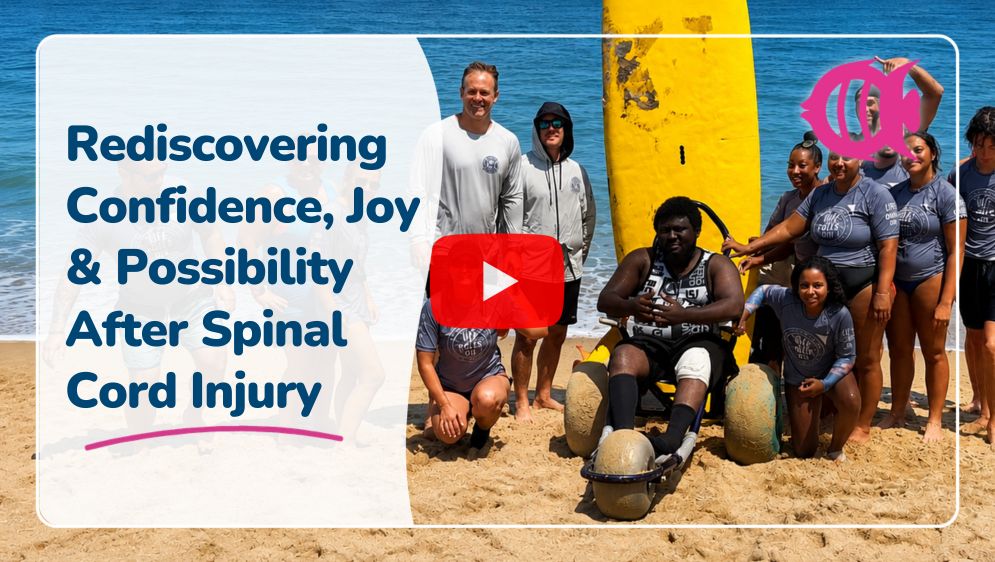
The following day, Godlove participated in Life Rolls On’s adaptive surfing event in Virginia Beach. After becoming more comfortable going underwater and navigating his body in the pool, he was able to take on an entirely new challenge in the ocean.
From fear in the pool to confidence in the ocean, his experience was a powerful reminder of what can become possible when someone is given the right support and the opportunity to try.
Watch Godlove’s Story
Watch his story and see the journey from uncertainty in the water to swimming independently—and then taking on adaptive surfing the very next day.
From the Pool to the Ocean: Adaptive Surfing After Spinal Cord Injury
The impact of the weekend didn’t end when the swim lessons were over. The following day, we watched many of the same individuals participate in an adaptive surfing event with Life Rolls On in Virginia Beach, where we saw the confidence they had developed in the pool carry into a completely different aquatic environment.
Participants who had spent the previous day working through uncertainty in the water were now navigating the ocean, falling from boards, going underwater, and taking on new challenges with greater confidence. Watching Patrina, Godlove, and the other participants experience adaptive surfing was a powerful reminder that adaptive swimming can open the door to possibilities far beyond the pool. Sometimes, learning to feel confident in the water is just the beginning.
Explore More: Spinal Cord Injury and Adaptive Aquatics
Our experience at SPINALpedia was one weekend, but the stories and lessons from this community continue to inspire us. To learn more about how the Swim Whisperers® methodology can support greater independence in the water, explore our Spinal Cord Injury YouTube playlist for additional stories, adaptive aquatic strategies, and real-world experiences.
Adaptive aquatics isn’t about teaching everyone to swim the same way. It’s about finding the strategies that help each individual build confidence, increase independence, and discover what’s possible in the water.
A Weekend We Won’t Forget
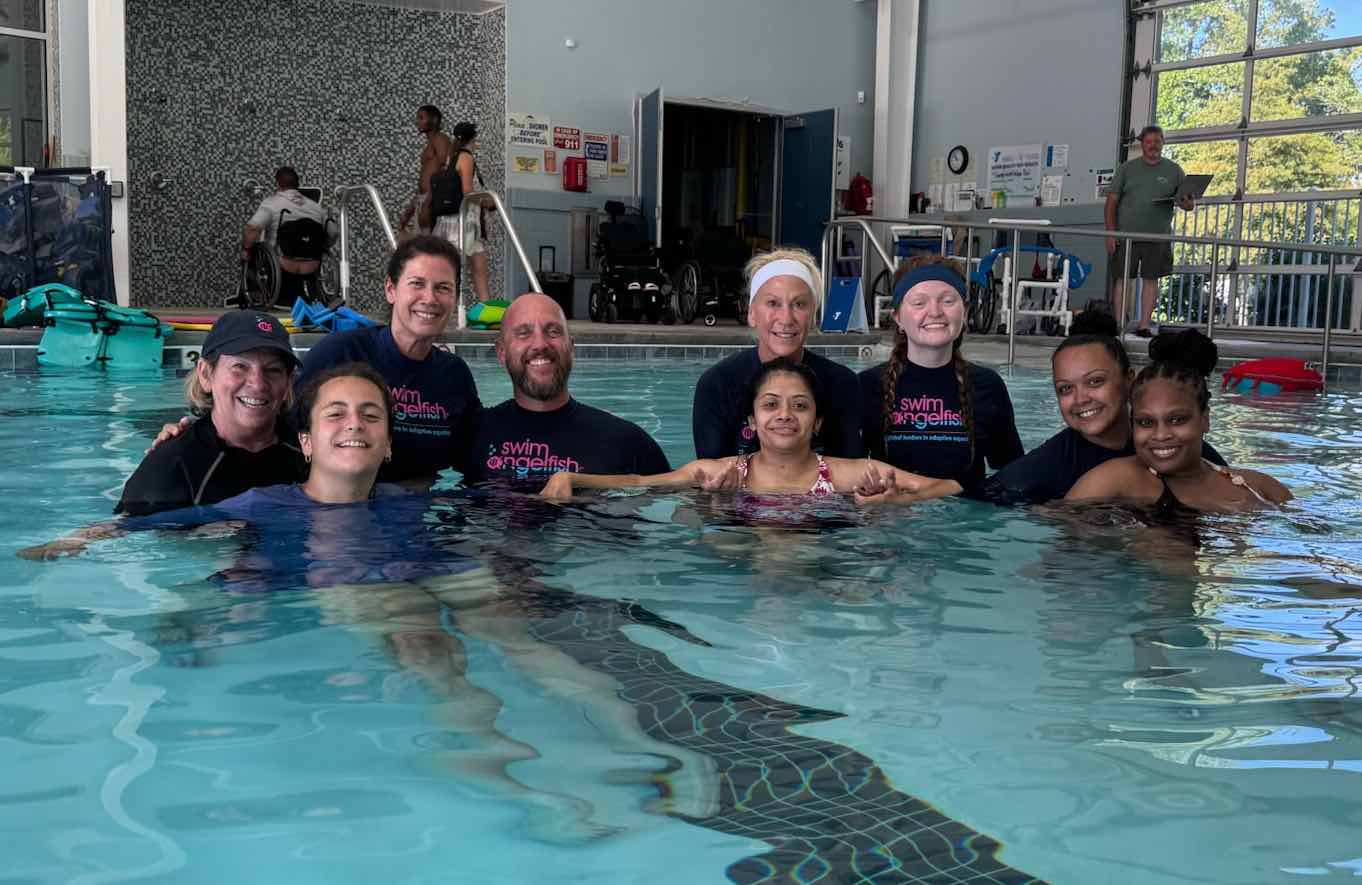
Our time at SPINALpedia was a powerful reminder of why adaptive aquatics matters. Across 20 lessons, we watched swimmers build confidence, work through fears, and discover new possibilities in the water—and then saw some of those same individuals carry that confidence into adaptive surfing with Life Rolls On the following day.
As a team, we were honored to donate our time and travel to be part of this experience. All five members of the Swim Angelfish team left with life-changing moments and a deeper appreciation for the courage, determination, and inspiration each participant shared with us.
We’re incredibly grateful to Step Into Swim for making these lessons possible, to SPINALpedia for bringing this community together, to Life Rolls On for creating opportunities beyond the pool, and to every swimmer who trusted us to be part of their journey. These are the experiences that remind us why we do what we do.