Adaptive Aquatics: Where Do I Begin? A Guide to Making an Impact in One Lesson

As therapists and swim instructors, we all got into this field to help other people. Aquatic therapy in particular, uses the properties of the water to help achieve our goals faster and has been the reason why our Swim Angelfish therapists love working in the water.
But when you’re standing at the edge of the pool with a new client, especially someone with complex physical or neurological needs, where do you begin?
At a recent event we attended with a group in Virginia called SpinalPedia, individuals who were newly injured with spinal cord injuries came together for support, adventure and fun. We offered swim lessons to a group who had not been in the water since their injury.
Some had been swimmers before their injury. Some couldn’t swim prior to their injury. And some never thought they could return to finding independence in the water.
Regardless of their previous water experience, everyone had the same three obstacles, which are right out of our Swim Angelfish Methodology:
- How do I control my body and breath?
- How do I successfully submerge?
- How can I be safe?
Three Foundations for a Successful First Lesson
Identifying and addressing these three areas created the foundation for a successful first lesson. Once our swimmers had that foundation, everyone was able to take off and do amazing things in the water.
These are the takeaways we wanted to share with you so you can apply them to your next aquatic therapy or adaptive swim lesson, whether you’re working with someone with a spinal cord injury, a neurological condition or another complex physical need.
1. Start With Body Control in the Water
Start by practicing how to assist your client with controlling their body within the buoyancy of the water.
Providing stability for them as they navigate this in all positions is key.
Practical Client Handling Techniques
- Sitting on your knee and gently moving side to side with support at their hips or lower trunk, depending on their body control.
- Holding the side of the pool and letting their legs float up as they move towards their belly.
- Laying on their back with support and initiating sitting up by flexing their upper body and pushing their lower body down towards the floor.
- Having them regain midline as you move them side to side.
- Teaching them how their body follows their head in all directions and in all positions.

For clients with spinal cord injuries or neurological conditions, developing body awareness, postural control and the ability to respond to the effects of buoyancy can be an important first step in aquatic rehabilitation.
2. Work on Submersion with Full-Body Stability and Support
Once you have established a stable position, start to work on submersion.
Practical Tips for a Successful Submersion
- They can either be holding the side of the pool, sitting on your knee, or floating on their belly while holding your shoulders.
- Grade the input of lips, nose and eyes going under and respond with strategies based on what you see.
- If they inhale, encourage exhalation and humming.
- As they become comfortable, assist them with a rhythm of under for three and then we come up, helping and supporting them so they feel safe.
This allows you to work on breath control and tolerance for submersion while maintaining the stability they need to feel successful.
3. Empower Them to Move Towards Safety
Now it’s time to help them understand how to get themselves to the side of the pool.
Activities to include:
- You can start with prone on the belly, gliding to the side as they reach for the wall. Encourage them to extend their head so their body follows, coming into a vertical position.
- You can also introduce rollovers in supported supine. With them on their back, assist with a head turn in the direction of the wall, encouraging them to roll towards their belly, take the side and come into a vertical position.

These skills introduce an important element of water safety and independence. The goal isn’t simply getting from one place to another. It’s helping the swimmer understand how to move toward a safe position in the water.
See What’s Possible When You Start With the Foundations
Watch these inspiring stories of swimmers who started with these foundational skills and went on to achieve greater confidence, independence and success in the water.
Godlove’s Story

Splash Pad Fun with Julie
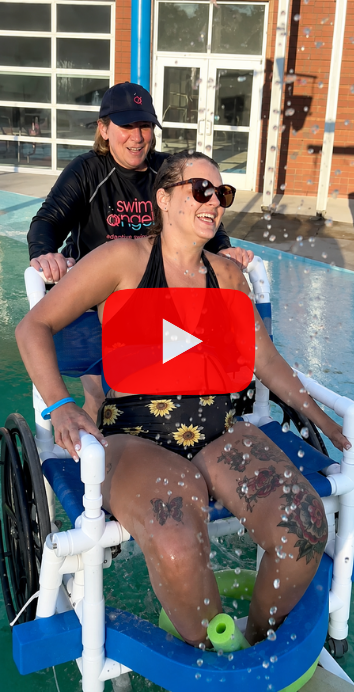
Laney’s Story

From the First Lesson to the Next Goal
Working on these three skills at the start of your session opens the door to progressing toward your client’s specific goals.
For one swimmer, that might mean returning to recreational swimming after a spinal cord injury. For another, it might mean improving functional mobility or postural control through aquatic therapy. For another, it may simply be developing the confidence to participate in an adaptive swim lesson.
The starting point may be different for every swimmer, but the question remains the same:
Where do I begin?
Sometimes the answer isn’t the biggest goal you want to achieve.
It’s the skill that gives your swimmer the control, confidence and safety they need to get there.
Comfort. Confidence. Capability.
That’s how you can make an impact in one lesson.