What to Do When Your Child Refuses Swim Lessons
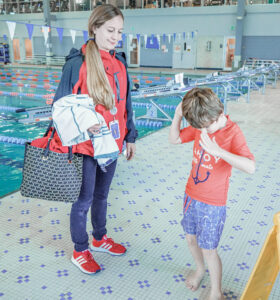
You’ve packed the bag, driven to the pool, and arrived with the best intentions. Then your child refuses to get in.
Maybe they’re crying. Maybe they’re running away. Maybe they’re clinging tightly to you, or simply saying “No.” If you’ve experienced this, you’re not alone.
When your child refuses swim lessons or has swim lesson anxiety, they’re not necessarily saying “no” to swimming. They may simply be telling you they need a different transition into the water.
This can feel especially overwhelming when you’re trying to figure out how to help a child afraid of swimming, or when sensory overload at swim lessons makes even getting to the water feel impossible.
But refusal is information, and once we understand what a child is communicating, we can begin to help in a more effective way.
For many families of children with special needs who refuse swimming, these moments can bring up frustration, worry, and uncertainty about whether swim lessons will ever work. We share our top 5 tips for what to do when your child says ‘no’ to swim lessons.
1. Refusal Is Communication – Figure out Why
Refusal is communication. Understanding the reason behind it is the first step toward helping.
When a child refuses swim lessons, there is usually a reason.
- Some common reasons include:
- Fear of water or past negative experiences
- Sensory overload in a busy pool environment
- Anxiety about transitions (home → car → pool → water)
- Difficulty with new or unfamiliar expectations
- Seeking movement or sensory input in ways that look like “avoidance”
- Overwhelm in spaces like changing rooms or loud facilities
Instead of focusing on “Why won’t they listen?”, shift to: “What might be making this difficult for them right now?”
This small change in perspective can open the door to solutions that actually work for your child.
2. Reduce the Pressure or Expectation
When a child refuses, it’s natural for the moment to feel like it’s ‘all or nothing’.
Sometimes the best step forward is a smaller step. Scaling back the expectation, reducing the demand and breaking the task of getting in the pool and swimming into smaller chunks can help.
- That might mean:
- Sitting on the pool edge instead of entering the water
- Splashing hands and feet
- Watching the lesson from a safe space
- Participating for just a few minutes
- Entering the water with full support, being held, rather than full independence
Lowering expectations for the day doesn’t mean lowering expectations for the future.
In fact, reducing pressure often creates the conditions where progress becomes possible again. Small wins build trust. Trust builds confidence. And confidence and swimming skills tend to build together over time.

3. A Regulated Body Learns Better
Sometimes what appears as refusal is actually a child who is overwhelmed, dysregulated, or not yet in a state where they are ready to engage.
This is why the period before a swim lesson can be just as important as the lesson itself. The way a child arrives at the pool often influences how they are able to participate once they are there.
In the 10 minutes leading up to swim lessons, it can be helpful to shift the focus away from compliance and toward regulation.
This might include:
- Walking around the building or spending time outside
- Allowing movement rather than trying to restrict it
- Offering a calming familiar activity or a soothing toy they can bring to the pool.
- Reducing repeated instructions, negotiation, or pressure before entering the water.
These approaches can be especially supportive for children who are experiencing anxiety or who are sensory seeking.
When a child’s nervous system is calmer and more regulated, they are generally more able to connect, process instruction, and participate in learning activities.
4. Success Doesn’t Have to Look Like Everyone Else’s Routine
Many challenges with swim lessons don’t actually begin in the water. They often start earlier, in the transitions and environments leading up to the pool.
There is no single “correct” way for a child to arrive ready for a swim lesson. Readiness looks different depending on the child, the day, and the level of support needed.
In many cases, it can help to simplify or adapt the steps before the lesson, such as:
- Arriving already wearing swimsuits
- Leaving in swimsuits (if weather conditions allow)
- Avoiding busy or overstimulating locker rooms where possible
- Using a quieter or alternative entrance to the facility
- Reducing unnecessary transitions wherever they create difficulty
These kinds of adjustments are not about bypassing the process or avoiding expectations. They are practical support strategies designed to reduce barriers to participation.
What matters most is whether the child is able to arrive in a state where learning and participation are accessible once the lesson begins.
5. Ask: “What Support Do They Need to Succeed?”
In moments of stress at the pool, it’s natural for parents to be concerned and think:
“My child can’t do this.”
Rather than focusing on what your child can’t do in the moment, a more helpful question to guide your actions is:
“How can I help so they can?”
This shifts you into problem-solving mode at the pool, where small adjustments in your response can make a big difference.
Here are practical things you can do as a parent in real time:
- If your child is anxious, stay calm and slow your own pace. Use simple, predictable language like “First we walk, then we watch, then we go in,” and avoid adding extra instructions or pressure in the moment.
- If your child is sensory-seeking, allow safe movement before the lesson rather than trying to stop it immediately. This might look like walking together, pacing, or giving them something to hold while they move toward the pool area.
- If your child is overwhelmed, reduce the number of demands you place at once. Focus only on the next smallest step (e.g., “Let’s sit here,” rather than “We need to get in now”).
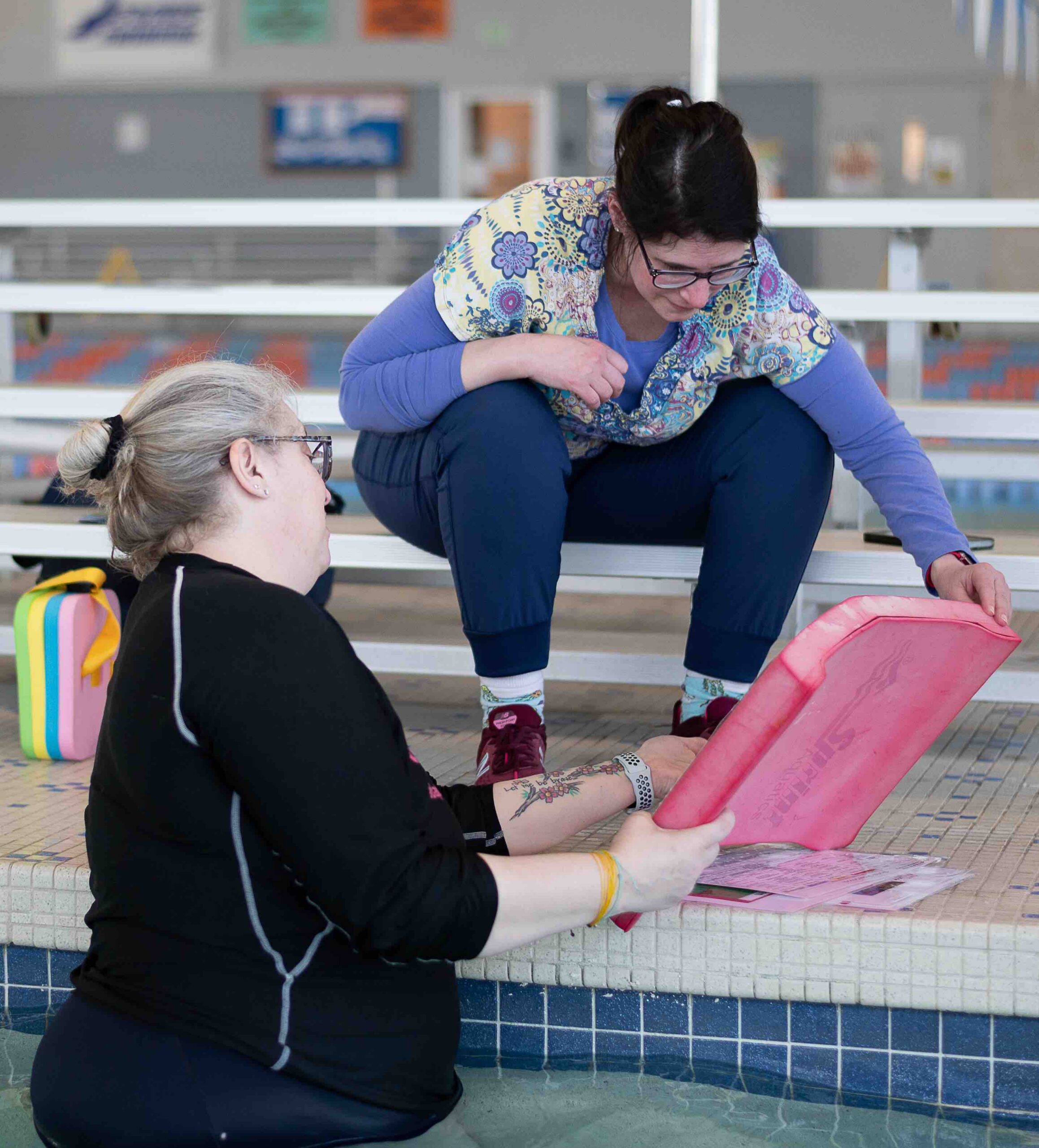
- If your child is resisting transitions, stick closely to familiar routines you already know work for them. Use the same phrases, countdowns, or sequences you use at home or school, rather than introducing new expectations in the moment.
- If your child likes visual supports, then use a visual schedule to assist with transitions so that expectations are understood.
Across all of these situations, the focus doesn’t need to be on getting your child to “comply” in the moment. It’s about making the next step feel more doable.
For children who won’t go to swim lessons, the challenge is often not about willingness it’s often a response to overwhelm, fear, or sensory input in the environment. Once your child gets in the water and is ready for their lesson, their swim anxiety may show up. We share tips on how to help a child overcome anxiety during their swim lesson and explain why this might happen.