Water Safety Guide for Children with Disabilities
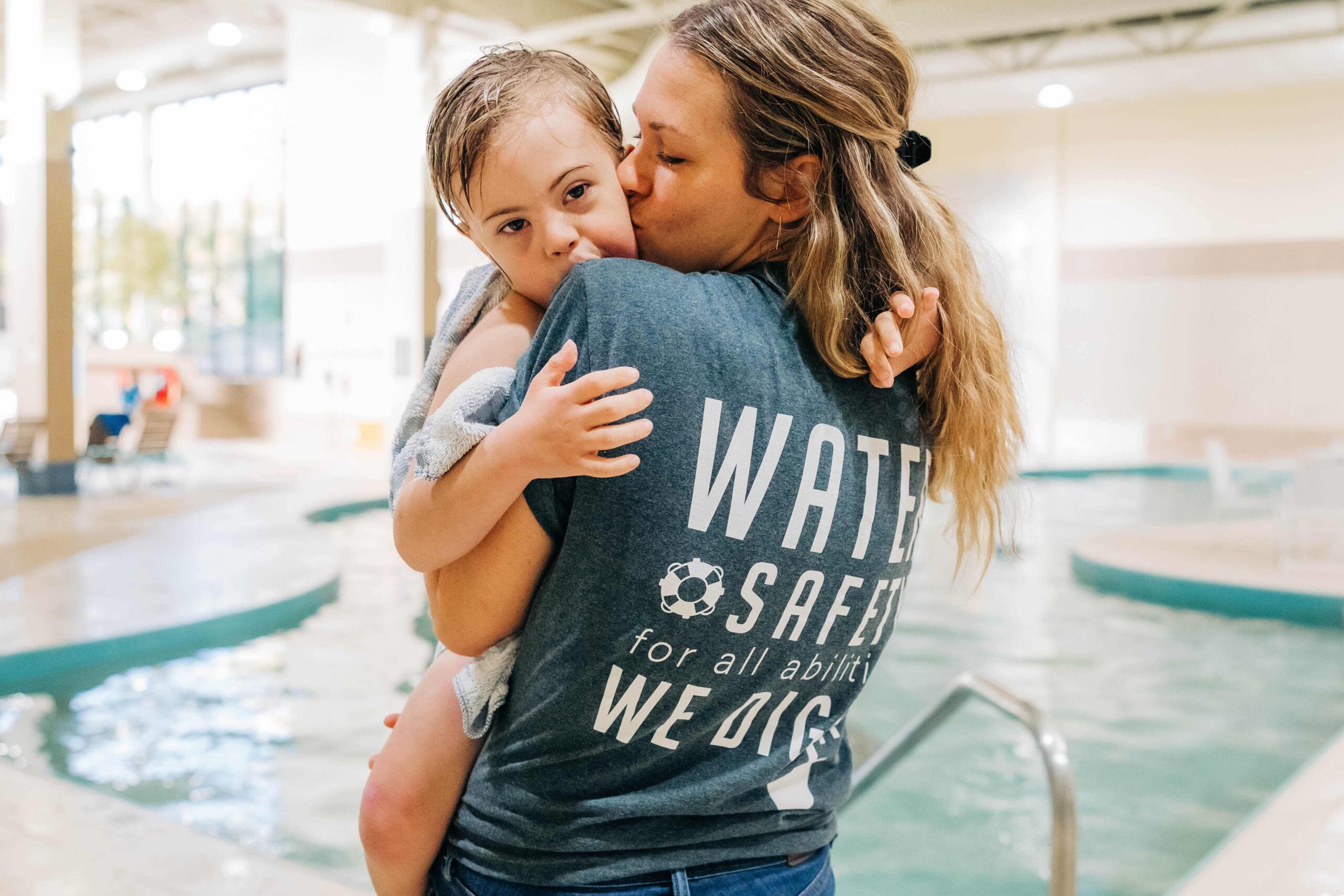
What if you could help keep your child safer in, near, and around water?
For many families, water is a place of joy—but it can also carry real and urgent risk. Each year, more than 70,000 children under the age of five drown worldwide[1], and drowning remains one of the leading causes of death for children aged 1–4[2]. These numbers are difficult to read, and even harder to accept, because behind every statistic is a child, a family, and a moment that changed everything.
For children with disabilities, the risk can be even higher. Differences in awareness, communication, sensory processing, or physical ability can make it harder to recognise danger, respond quickly, or call for help. For example, children with Autism Spectrum Disorder may be naturally drawn to water, be impulsive, may wander unexpectedly (often called an elopement risk,) may not fully understand unsafe situations, and may not know how to swim—factors that can significantly increase drowning risk.
Organizations such as our partner, Stop Drowning Now, continue to highlight drowning as a leading cause of preventable death in young children, reinforcing the importance of proactive, layered safety approaches—especially for those with additional needs.
In this guide, we’ll explore why children with disabilities face unique water safety risks, and break down practical, layered strategies that parents, caregivers, and instructors can use to create safer, more confident experiences in, near and around water.
Why Water Safety Is Critical for Children with Disabilities
Research consistently shows that children with disabilities face significantly higher drowning risk compared to their peers. These statistics highlight why proactive, layered water safety strategies are essential:
These heightened risks are not tied to one condition alone. They are often influenced by a combination of factors that can vary widely from child to child, including:

Together, these factors reinforce why water safety must go beyond supervision alone and instead focus on individualized, layered prevention strategies.
Understanding Unique Water Risks by Ability and Need
Not all water risks look the same. For some children, risk is linked to physical limitations; for others, it relates to sensory processing, communication, or behaviour that affects how they interact with water. Understanding these factors is key to creating effective, individualized water safety strategies.
1. Sensory and Behavioral Differences (Including Autism)
Children with high sensory needs like Autism Spectrum Disorder, may be naturally drawn to water due to its sensory properties—movement, reflection, pressure, and sound – which can all be highly engaging. This can help explain why families often ask “Why are autistic children attracted to water?”.
Common risk factors include:
- Wandering or elopement behaviors, where a child may move unexpectedly toward water without understanding environmental danger.
- Attraction to water sources, including pools, baths, ponds, or open water.
- Reduced danger awareness, where risk is not fully understood or recognized in real time.
- Difficulty processing verbal safety instructions, especially in stimulating environments.
These factors are not specific to one diagnosis alone, but are often seen across a range of developmental and cognitive differences, which is why sensory-informed safety planning is essential when addressing water safety sensory issues.
2. Physical and Motor Challenges
For some children, water risk is influenced more by physical ability than behavioral factors. In these cases, physical disability swimming safety becomes a key consideration in prevention planning.

Common challenges may include:
- Low muscle tone, which can affect buoyancy control, strength and endurance in the water.
- Coordination difficulties, impacting balance, movement, swim skill acquisition, and ability to recover after slipping or submerging.
- Fatigue or reduced endurance, which can limit safe time in water and delay self-rescue responses.
These factors mean that even confident or familiar swimmers may still require close, adaptive supervision and skill support.
3. Medical and Health Considerations
Some children face additional risk due to underlying medical conditions that can affect safety in aquatic environments. These require careful planning and communication between caregivers, instructors, and healthcare providers.
Key considerations may include:
- Seizure disorders, where sudden loss of awareness can occur without warning.
- Airway management needs, and aspiration risks, which require strict water exposure precautions.
- Respiratory conditions, which may limit breath control, endurance, or tolerance of water immersion.
In these cases, water safety is not only about swimming ability—it is about medical readiness, environmental control, and emergency preparedness.
Why This Matters
Because each child is unique, water safety cannot rely on one approach. Effective prevention depends on recognizing key sensory, physical, behavioural, and medical factors and building layered strategies early.
The 4 Extra Layers of Adaptive Water Safety (Swim Angelfish Framework)
Water safety for children with disabilities is built on well-established drowning prevention guidance, including close supervision, physical barriers, and early swim instruction.
From this foundation, the Swim Angelfish approach introduces four additional layers designed to better support children with diverse sensory, physical, behavioural, and medical needs—helping to strengthen safety, learning, and confidence in aquatic environments.
1. Ritual and Routine
Many children with disabilities thrive on predictability. As highlighted in Swim Angelfish’s adaptive teaching approach, consistent routines can significantly reduce anxiety and improve cooperation in and around water.
By intentionally building structured water entry and exit routines, caregivers and instructors can:
- Build consistent “pause points” into the routine where the child always stops and waits for caregiver permission before entering the water.
- Create predictable physical routines that break the impulse action of jumping right into water, and reinforce more timely supervision checks to prevent unsupervised entry into the water.
- Reduce overwhelming transitions by keeping entry and exit routines consistent and predictable, helping children feel more secure and safer around water.
- Increase predictability throughout swimming by using the same cues and structure, supporting regulation, understanding, and safer routines.
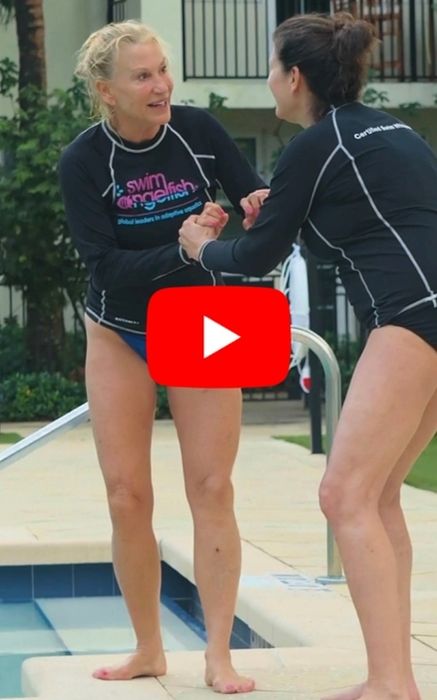
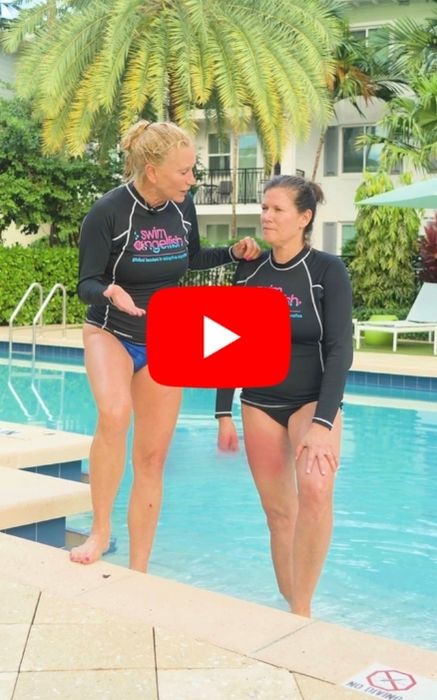
Simple, repeated rituals designed for safety—such as always entering the pool the same way or moving along the wall to get to the stairs to climb out, or “swim, float, swim “ until you are in the shallow, before exiting—help establish safety as part of the routine, not an exception to it. This should be something the swimmer finds motivating, enjoyable, and generalizes to other aquatic environments.
2. Monitor and Intervene
Close, active supervision is essential for all swimmers, but especially for those with heightened sensory-seeking or impulsive behaviours. Some children may engage in behaviours such as prolonged submersion, repetitive jumping, or breath-holding, which can increase risk if not carefully observed.
The goal of this layer is not just watching—but intentional monitoring with readiness to intervene immediately when needed.
This includes:
- Staying physically close and actively engaged (not passive supervision).
- Recognizing individual sensory patterns and triggers.
- Anticipating and preventing risk-related behaviors (like long or repetitive under water breath holding).
- Responding quickly and calmly when intervention is needed.
Intentional monitoring means understanding that some swimmers may not naturally recognize danger or unsafe behaviors in water. Staying within reach, actively engaged, and aware of individual risk patterns helps create safer experiences while still allowing swimmers to explore and enjoy the water. Consistent intervention strategies—such as practicing “only under for 5, then take a breath,” setting predictable safety limits, and reinforcing regulated swim routines—help build safer habits across aquatic environments.
3. Rescue and Equipment Familiarity
Safety equipment is most effective when it is understood and normalized before an emergency ever occurs. Both neurotypical and neurodivergent swimmers benefit from early and repeated exposure to rescue tools.
This includes:
- Using properly fitted lifejackets and understanding when they should be worn.
- Becoming familiar with rescue tubes, buoys, and other poolside safety equipment before an emergency occurs.
- Learning what each piece of safety equipment is for and how it may be used to help keep swimmers safe.
- Practicing safe interactions with rescue equipment to reduce fear, overwhelm, or confusion during emergencies.
- Creating repeated, positive exposure to safety tools so they become a familiar and expected part of the aquatic environment.
Familiarity reduces fear and confusion in emergencies and helps build confidence in the overall safety system. It also supports instructors, caregivers and emergency response teams in responding effectively if an incident occurs.

4. Adaptive Swim Skills
Teaching functional swim skills is a core part of drowning prevention, but for children with disabilities, instruction must be responsive to individual sensory, motor, emotional, and communication needs.
This is why specialized instructor training is a key layer of protection in adaptive water safety. Skills like swim-float-swim are not one-size-fits-all—they require an understanding of how different learning profiles impact attention, motor planning, and processing in the water.
With appropriate training, instructors are better able to recognize how a child is responding in real time and adjust cues, pacing, and expectations to support meaningful skill development. Without this, it can be difficult to ensure that survival skills are truly understood and retained.
Ultimately, this is what elevates swim instruction into a true safety layer—not just teaching movement but building the ability for each child to respond more safely and independently in an emergency.
Practical Strategies to Apply the 4 Layers of Adaptive Water Safety
So, what does this look like in practice, and how can you start applying these ideas in real-life water environments?
Ritual and Routine – Create Predictable Water Entry Systems
In real-life settings, safety often starts before a child even gets into the water. The goal here is consistency—so water entry is never sudden or unstructured.
How to apply it:
- Use the same step-by-step entry routine every time (arrive → pause → do a meaningful series of movements → permission → enter).
- Build a clear “stop and wait for permission” point before entering water.
- Use consistent, simple cues like “wait” or “ready.”
- Practice the full routine outside of the pool first so it becomes familiar and predictable.
- Use the All Abilities Water Safety Activity Book to reinforce the routine in a fun and interactive way.
Why this works:
When routines are consistent, children are less likely to enter water impulsively and more likely to pause and wait for caregiver direction.
Monitor and Intervene – Stay Actively Engaged
Supervision is most effective when it is active, intentional, and focused on the child—not the environment or distractions.
How to apply it:
- Assign a dedicated water watcher with no phone or distractions.
- Position yourself within arm’s reach for higher-risk swimmers.
- Maintain continuous visual attention and scan regularly.
- Learn each child’s early signs of sensory seeking, excitement, or overload.
Why this works:
Early recognition allows adults to step in before behaviours escalate into unsafe situations.
Rescue and Equipment – Build Familiarity Before It’s Needed
Safety equipment is most protective when it is already familiar—not introduced for the first time in an emergency.
How to apply it:
- Introduce lifejackets, floatation aids, and rescue tubes outside the pool first.
- Let children touch, hold, and explore equipment in a calm setting.
- Repeat exposure in shallow water before deeper environments.
- Use simple language like “this helps keep you safe.”
Why this works:
Familiarity reduces fear, confusion, and resistance if equipment is ever needed in a real emergency.
Adaptive Swim Skills – Build Body Control Through Real-World Practice
For a skill to truly support safety, it needs to transfer beyond lessons into real-world, unpredictable environments.
How to apply it:
- Use “PJ Swim Days” or similar themed sessions to provide sensory input and improve body awareness.
- Break skills like swim-float-swim into small, repeatable steps.
- Focus on body position, control, and response, not just movement.
Why this works:
Wearing something close to the skin that is heavier imitates what it would feel like to be in water fully clothed. It helps children understand and control their body in water more effectively. This then provides the input they need and will hopefully replicate in a real-world safety and response.
Final Thoughts from Swim Angelfish Founders
Water safety for children with disabilities is never about a single skill or a one-time lesson. It is about building consistent layers of protection—supervision, environment, equipment, and adaptive skill development—that work together to support each child’s unique needs.
This work is deeply personal to us. We have seen how the right education, awareness, and strategies can change outcomes for families, and we are passionate about helping parents, caregivers, and instructors feel more confident and prepared around water.
Our hope is simple: that no one ever feels they didn’t have the knowledge or tools to help prevent a tragedy.
When these layers are understood and applied consistently, they do more than improve safety—they build confidence, trust, and the ability for children to engage more safely and independently in water.
If you’re ready to take the next step, explore our free Adaptive Water Safety Toolkit or learn more about professional training in adaptive aquatics to to bring these strategies into your home, lessons, or practice.