How to Safely Transfer a Wheelchair User Out of the Pool
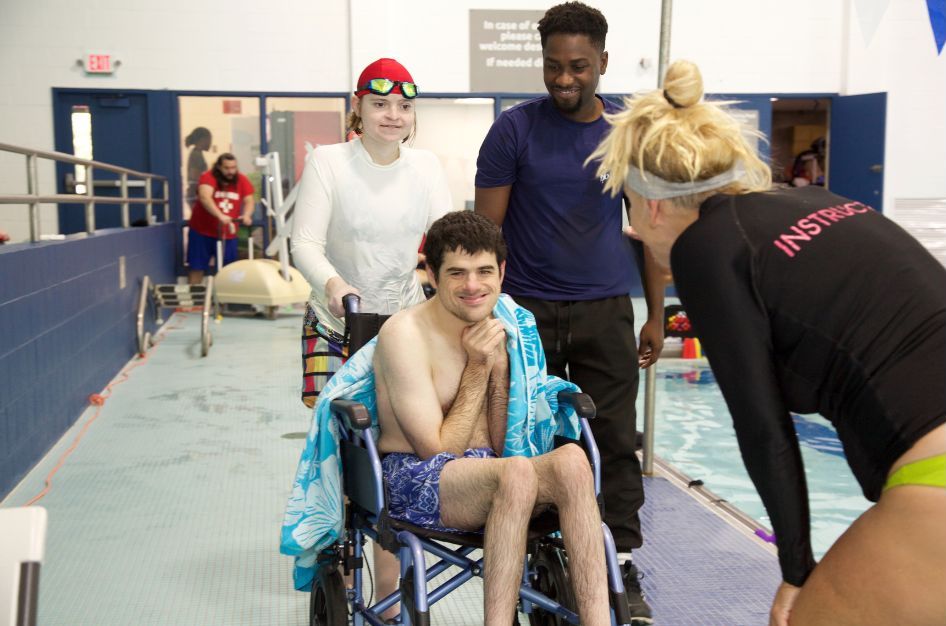
The swim lesson has finished, and your swimmer is at the pool side ready to transition out of the water. The swimmer uses a wheelchair on land, and now your role shifts from instruction in the pool to managing a safe and effective exit.
For aquatic professionals, this is a moment that requires quick but thoughtful decision-making. The right approach will depend on the swimmer’s needs, the facility setup, and the equipment available on deck. In some situations, a pool lift will be used. In others, staff may support a coordinated two person assisted transfer, or assist the caregiver as needed to safely guide the swimmer back into their wheelchair.
Understanding these options—and when to use them—is essential for ensuring every assisted pool to wheelchair transfer is safe, efficient, and appropriate. Knowing how to safely manage a pool to wheelchair transfer is a necessary skill for anyone working in adaptive aquatics.
Why Pool Exits Require Special Attention
Getting out of the pool safely is an important skill to be able to assist with if someone is unable to do this independently. Here are 3 considerations when helping someone exit the pool and transfer to a wheelchair:
Safe wheelchair pool exits rely on good planning, communication, proper technique, and respecting the swimmer’s preferences throughout the process.
Common Methods for Exiting the Pool
There isn’t just one way to help a swimmer exit the pool. It’s about working with the swimmer, listening to what works best for them and keeping everyone safe in the process. Here are 3 common methods for a wheelchair user to exit the pool:
1. Pool Lifts
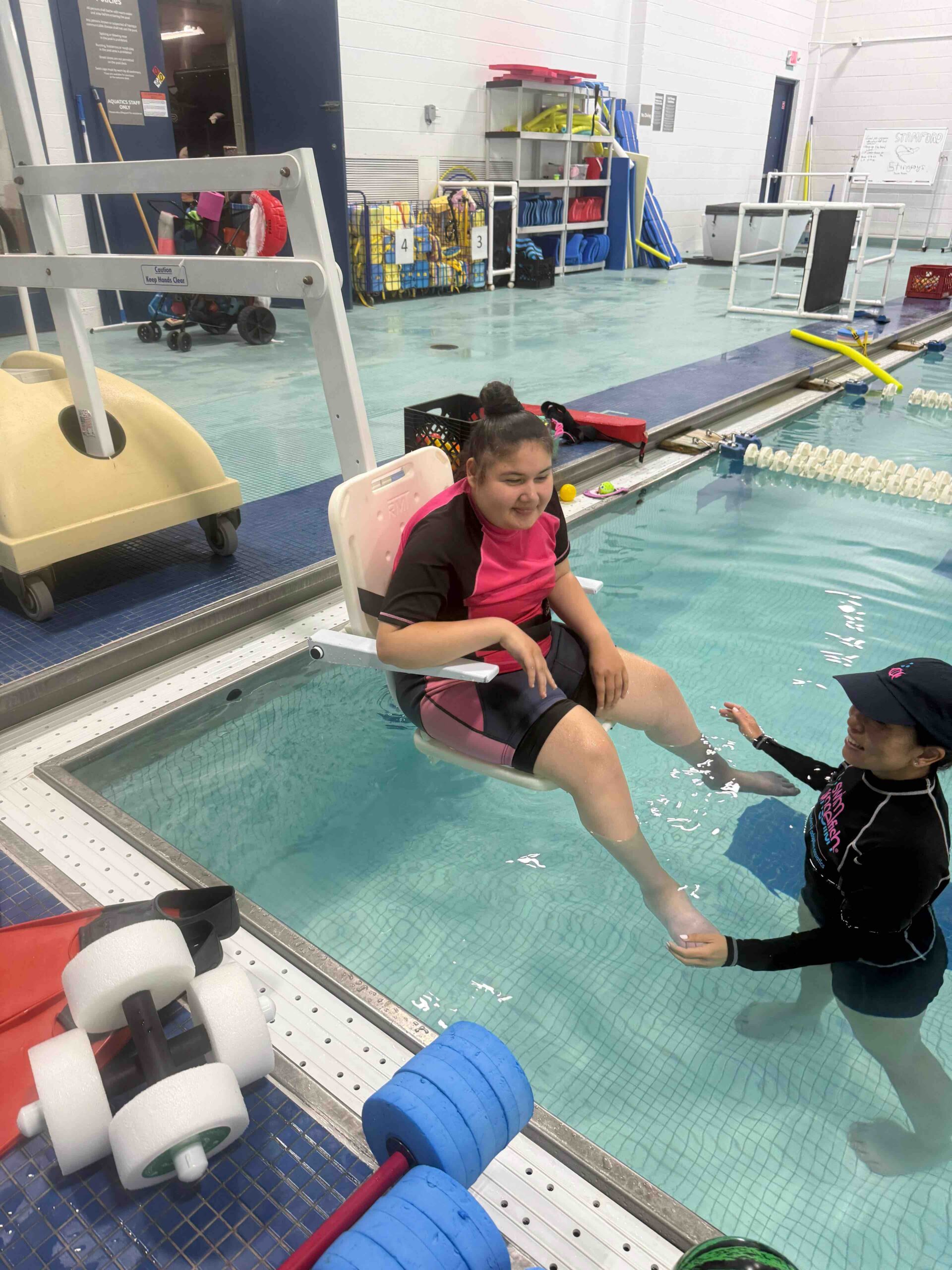
In many facilities, the pool lift is the go-to option. When used well, it makes the transfer controlled and predictable. The key is taking your time—positioning the swimmer properly, communicating clearly, and making sure they feel secure throughout the process. A good pool lift transfer technique can make this a smooth transition for everyone involved.
Staff should also take a moment to check that all equipment is functioning correctly before beginning the transfer and ensure the swimmer understands each step.
2. Assisted Manual Transfers
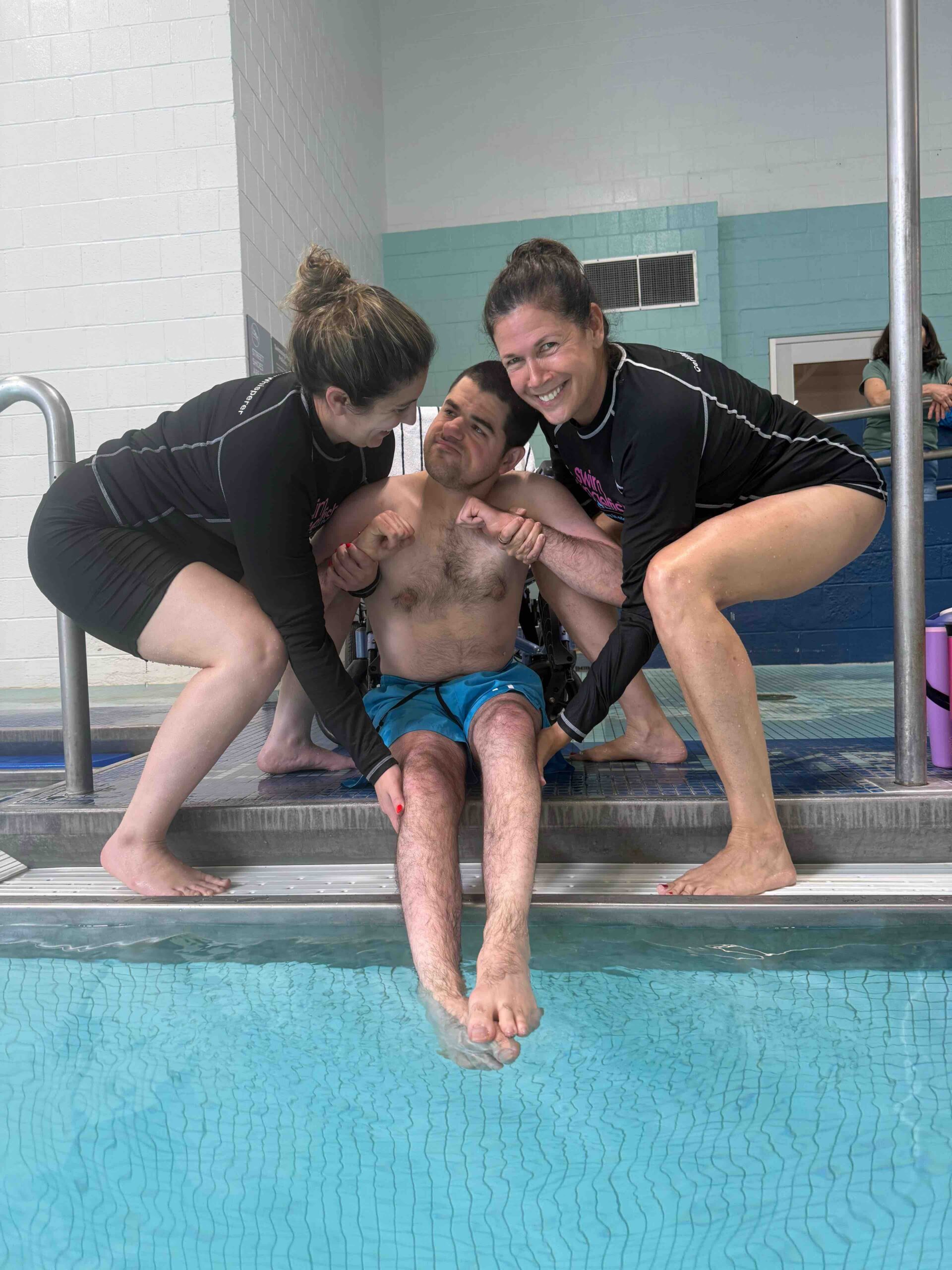
In some situations, staff may need to assist with a manual transfer. This could be one or more team members helping guide the swimmer from the pool edge into their wheelchair. Clear communication matters here—everyone needs to know their role before anything starts. It’s also important to move in a way that protects both the swimmer and staff, while always keeping dignity at the centre of the process. This is where using proper body mechanics for the pool transfer really matters.
An alternative to an assisted transfer is to use the Perfect Lift –a portable manual lift sling designed to support transfers in a comfortable way in a variety of situations, including exiting the pool.
3. Independent or Partial Transfers
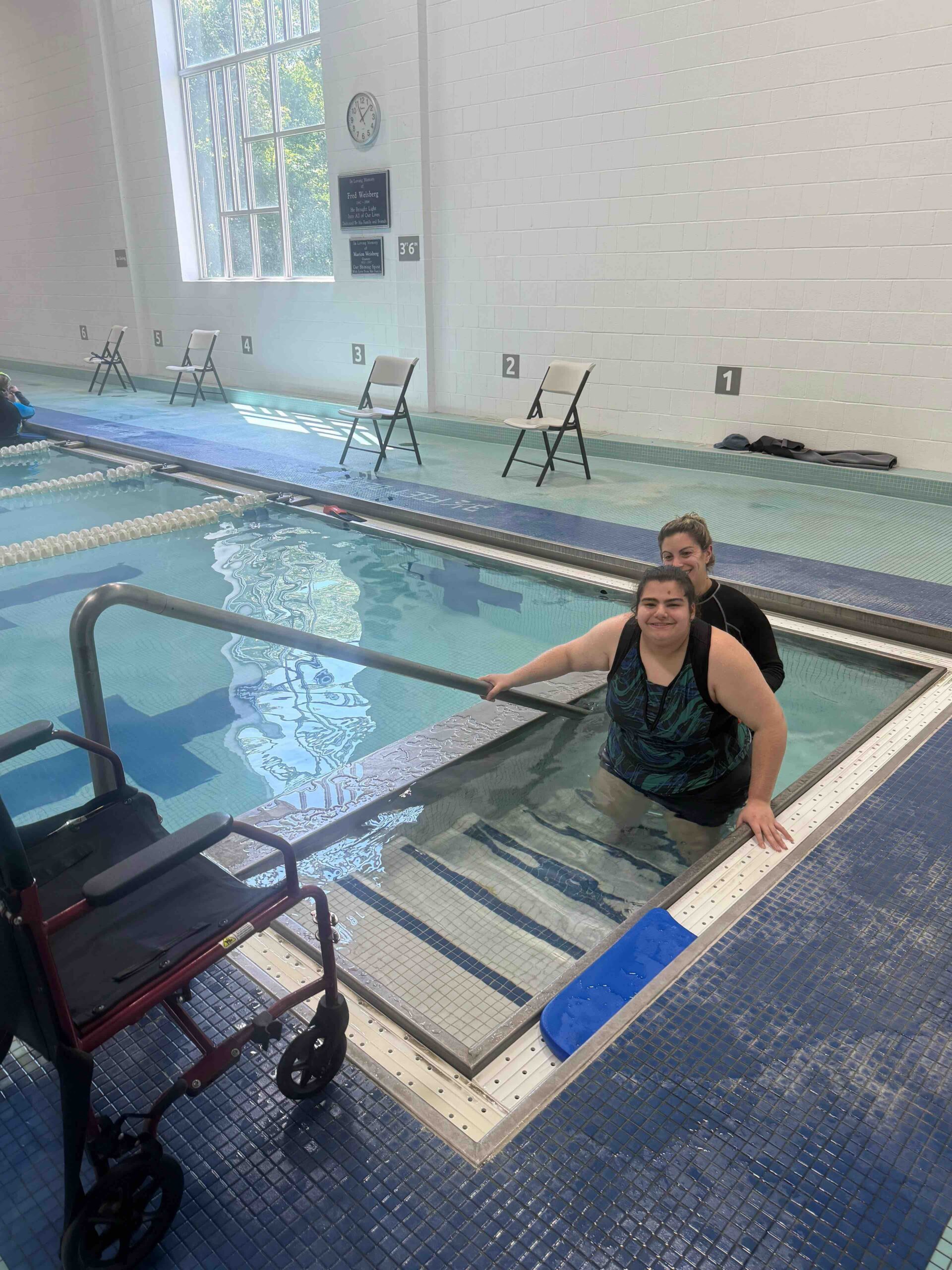
Some swimmers can take part in their own transfer, or complete parts of it with support. This might involve steps, rails, or a transfer bench depending on the setup. These moments are often great opportunities to build confidence and independence, especially in therapeutic or skill-based lessons. These approaches are part of broader aquatic therapy transfers and are always guided by what is safe and appropriate for that swimmer.
Exiting the pool can be considered the reverse of transfer to the pool process, keeping in mind now both you and the individual being transferred are wet so caution with grasp and slippery surfaces is needed. Read our guide ‘How to Transfer from a Wheelchair to the Pool’ to understand the step-by-step instructions.
Key Safety Principles for a Pool Exit to Wheelchair Transfer
No matter how the transfer is done, a few key principles always apply.
Take a quick look at the environment too. Wet decks, tight spaces, or clutter around the chair can all change how you approach the transfer.
These are the foundations of safe pool transfers for disabled swimmers, and they directly support pool deck safety for wheelchair users in everyday adaptive aquatics training.
Safe Pool Exits: What to Remember
Every pool exit looks a little different. Some are quick and straightforward; others take more time, communication, and coordination.
What matters most is taking the time to set things up properly, staying aware of the swimmer and the environment, and adjusting your approach based on your swimmer’s needs. There’s rarely a single “routine” way to do it safely, so make sure to adapt to what is needed.
These moments rely on good communication, clear coordination between staff when needed, and a focus on safe handling throughout the transfer.
When instructors treat the exit as part of the lesson—not just the end of it—it becomes a much safer and more consistent experience overall.