How Can Aquatic Therapy Help With Walking?
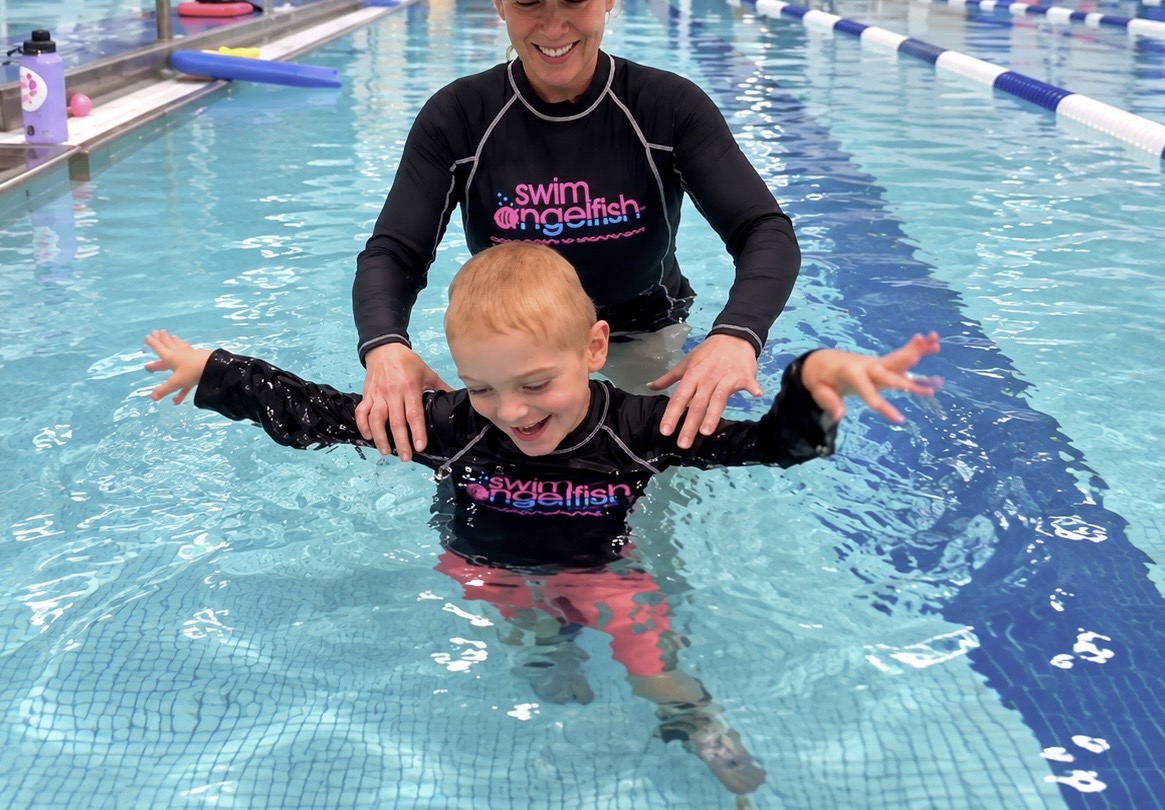
Aquatic therapy can help therapists work on the movement skills that support walking, including spinal mobility, core strength, postural control and weight shifting. The buoyancy and resistance of the water can provide a supportive environment for practicing these skills and progressively challenging movement as the client works toward greater independence with walking and gait.
As an aquatic therapist, we are always analyzing our clients’ movement to see what they need to help them achieve their functional goals. A very common goal for individuals with abnormal muscle tone and neurological conditions such as cerebral palsy is improving their ability to walk.
When walking is the goal, we need to look beyond the steps themselves and break down the components of this complex movement. What does the client need to be able to do to take a controlled step, shift their weight, maintain their balance and move their body efficiently?
Aquatic therapy gives us another environment in which to work on these underlying movement skills, allowing us to approach specific challenges in a different way while working toward the same functional goal. It can also complement land-based therapy.
We’ll share three movement components we often focus on when working toward improved walking: spinal mobility, core strength and postural control, and weight shifting.
What Does Walking Require?
Walking is an important gross motor skill that requires the body to work together in a coordinated way. Before a client can take a controlled step, they need to be able to move through their trunk, maintain postural control and shift their weight to allow one leg to become unweighted and move.
Aquatic therapists can look at these individual components and ask: “What is limiting this client’s movement and gait, and how can I use the water to help them work on it?”
For example, improving spinal and trunk mobility may help a client move more freely, while developing core strength and postural control provides a foundation for balance and coordinated movement. Practicing weight shifts helps the client learn to move their center of gravity and unweight one leg so they can take a step.
Let’s dive into three of these movement components and look at how we can work on them in the water:
How Can Aquatic Therapy Help With Spinal Mobility?
Spinal mobility is important for efficient movement and is easy to work on in the supportive environment of the water. The warmth of the water, combined with slow, rhythmic movement, can help create an environment that relaxes muscle tone.
Stretching muscles and improving mobility throughout the trunk and spine can be done with different aquatic therapy stretching and relaxation techniques.
One technique our clients love is a slow, gentle “snaking” motion as they lie on their back with their head supported on your shoulder. You can adjust your hand placement to target different areas.
Spinal Mobility Exercises to Support Gait:
- For lower trunk, lumbar spine and pelvic mobility: Align your hands in the direction of the ribs, supporting the lateral trunk as you slowly move the client from side to side.
- For more chest and upper-body mobility: Change your hand placement and have the client hold their arms around your neck as you continue the side-to-side movement.
- For trunk flexion and extension: Place your hands on the anterior chest and upper back, like a sandwich, and use a gentle “dolphin” motion, applying pressure through your hands as you move the trunk up and down.
- Add breath and buoyancy: As you walk backward, which encourages the lower body to float better, focus on expanding the rib cage with more trunk extension paired with inhalation and trunk flexion paired with exhalation.
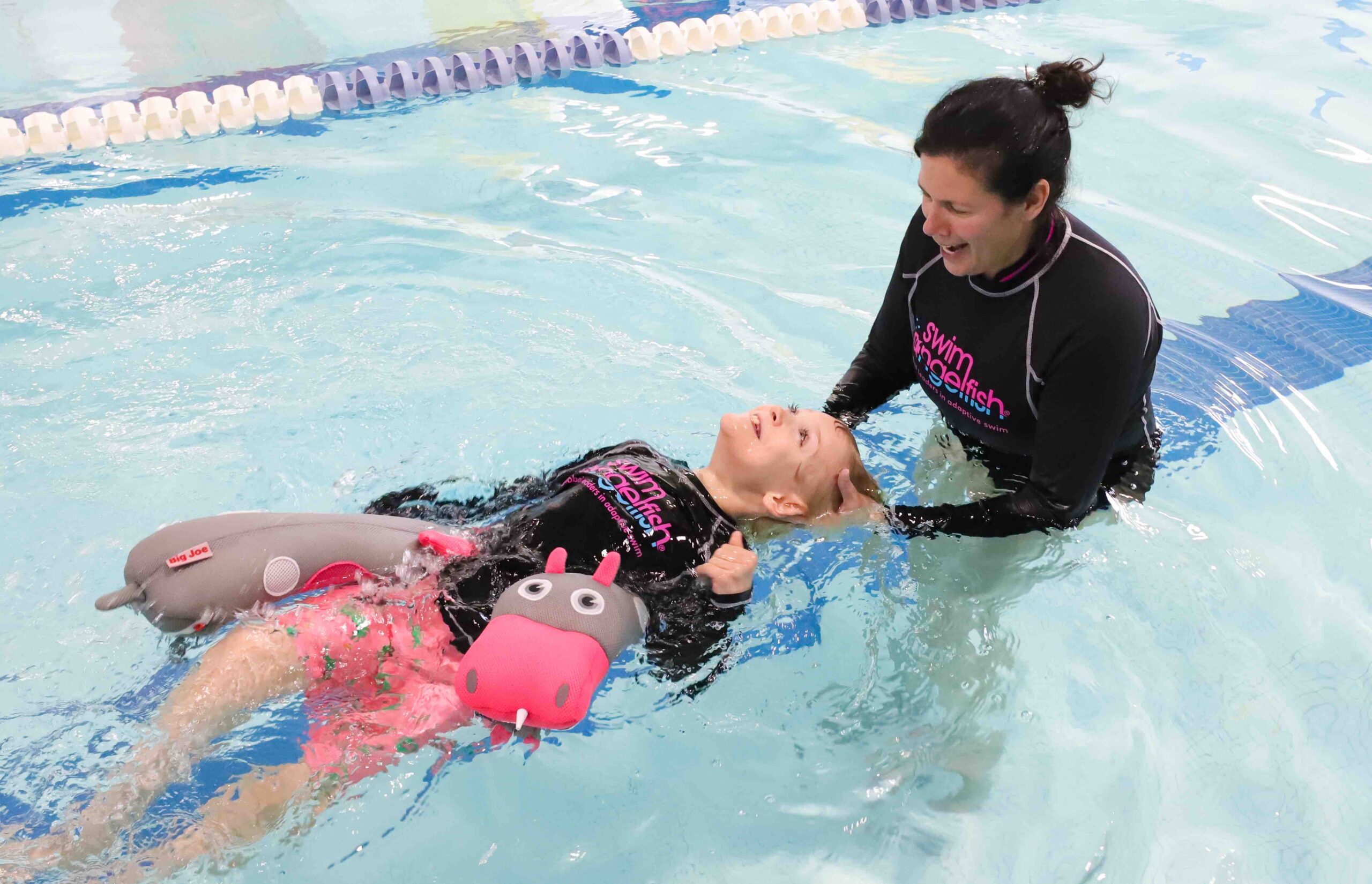
These small changes in hand placement and movement can allow you to target different areas while working on the spinal mobility needed for walking.
How Can Aquatic Therapy Help Build Core Strength and Postural Control?
Core strength and postural control are critical for independent movement. The ability to control trunk flexion, extension, and rotational movements provides a foundation for the balance and equilibrium reactions needed for coordinated movements like walking.
In the water, we can work on these movements in a gravity-reduced environment by rolling with our clients from their back to their belly and belly to their back. Our hand placement is at the lower ribs to assist with initiating the movement in a smooth, coordinated dance with our client, allowing them to contract their muscles to complete the roll.
Technique Tips for Strength and Postural Control:
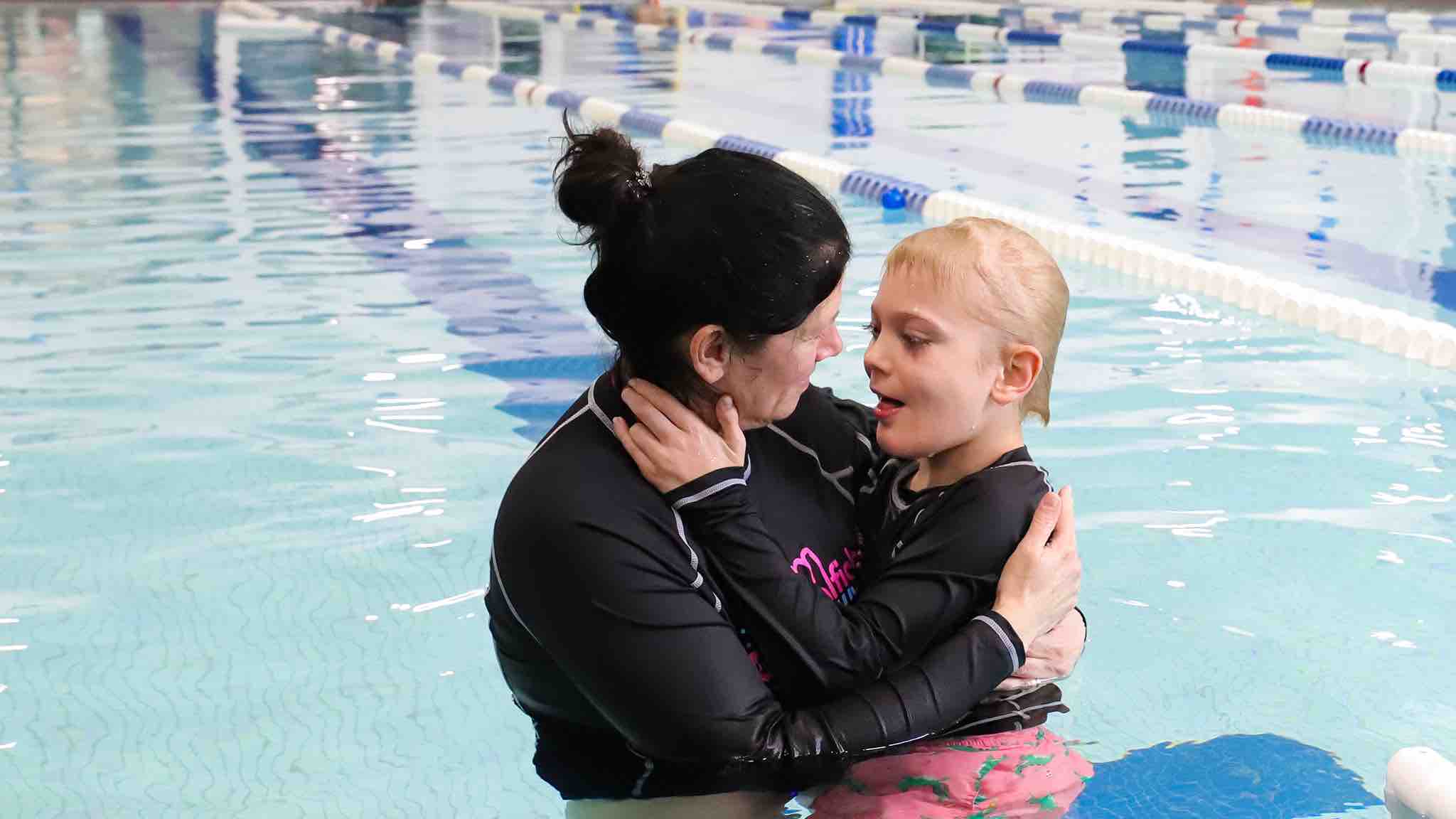
- Support at the lower trunk: When working on trunk muscles, support your client at the lower ribs or trunk and guide the movement pattern. Working from the lower trunk allows the client to work upward from the point of stability that your hands are providing.
- Encourage active participation: Assist with initiating the rotation, but allow your client to contract their own muscles to complete as much of the movement as they can.
- Avoid supporting under the arms: If you support the client under the arms, you are essentially facilitating the head and neck muscles rather than encouraging the trunk muscles to contribute to the movement. *Remember clients are working from where your hands are supporting them, upward.
Working on controlled trunk rotation and postural control in the water can help address the movement skills needed for balance and coordinated walking.
How Can Aquatic Therapy Help Weight Shifting for Walking?
Initiating a weight shift is an important component of movement. You need to be able to unweight a part of your body in order to allow it to move. This is demonstrated when you perform a weight shift to the side combined with some rotation so that you can lift the unweighted leg and take a controlled step.
A forward weight shift is key for initiating movement and triggers a balance reaction to naturally step and keep your base of support aligned with your center of gravity.
Aquatic Therapy Exercises for Weight Shifting:
- Practice side-to-side weight shifting: Work on shifting weight to the side and adding rotation so the client can unweight one leg and practice lifting it to take a controlled step. Adding a diagonal weight shift to this encourages trunk rotation.
- Practice forward weight shifting: Encourage a forward weight shift to initiate movement and work on the balance reaction needed to step while keeping the base of support aligned with the center of gravity.
- Work in different positions: You can practice weight shifting in different positions in the water, including as you introduce a swim skill such as changing directions. This allows the client to work on body control while moving from supine to standing and from standing toward prone.

Practicing these weight shifts in the water gives the client an opportunity to work on the movement patterns needed to initiate and control a step.
How Do You Progress Toward Walking in Aquatic Therapy?
Once you’ve worked on these three movement skills, begin working more directly on walking in the water. This can be particularly useful when working with children who have difficulty walking, as you can adjust the level of buoyancy support your client has. Remember that belly-button level provides approximately 50% buoyancy assistance, nipple level around 75%, and neck level about 90%.
As your client becomes more comfortable and gains greater control, you can gradually reduce the amount of buoyancy assistance. This encourages them to experience more of their body weight while continuing to practice the movement skills needed for walking.
The goal is to progressively challenge your client as their abilities change. This allows them to experience more of their body weight while continuing to practice the movement skills needed for walking and preparing to transition these skills to improved gait when they are out of the pool.
See these techniques in action: Watch Ailene work with Luke to combine these movement strategies with the therapeutic properties of the water.
Using Aquatic Therapy to Support Walking
When walking is the functional goal, looking at the movement components that support walking can help guide your aquatic therapy approach. Spinal mobility, core strength and postural control, and weight shifting can each be addressed in the water and then progressively challenged as your client develops greater control and independence.
Aquatic therapy provides a powerful sensory environment to work on the movement skills needed for walking while complementing land-based therapy.
Every client’s journey is different, but the goal is always to help them build the skills they need to participate more independently in the activities that matter to them.
Watch Cerebral Palsy & Walking | Aquatic Therapy for Improving Mobility to see Lilly’s aquatic therapy journey and how working in the water can support mobility and walking.
Continue Your Aquatic Therapy Education
Interested in learning more about aquatic therapy and how to apply these approaches in your practice? Explore our Aquatic Therapy courses for professional development and continuing education, with practical techniques and strategies to help you work toward your clients’ functional goals.