How the Properties of Water Can Transform Your Swim Lessons
What if everything you thought you knew about water was only half the story?
We all know that the water is a magical place to work. Its unique properties make it an incredible environment for exercise and therapy, helping both us and our swimmers feel good. But there is a secret layer to teaching in the water that goes beyond the surface.
Buoyancy, Hydrostatic Pressure, Viscosity, and Turbulence—these aren’t just scientific terms; they are the “invisible forces” behind every stroke. While we rely on equipment, drills, and curriculums to help our swimmers progress, the most powerful teaching tool at your disposal is the water itself.
When you use these properties intentionally and systematically, you can transform the way you teach and the way your swimmers move, learn, and succeed. The question is: how?
Let’s dive into four of the six water properties and explore how understanding their roles can unlock a new level of progress in your next lesson or therapy session.
The 4 Water Properties Every Adaptive Swim Instructor Must Understand
Water isn’t just the setting for swim lessons—it’s an active teaching partner. In this video, we explore the four essential properties of water every adaptive swim instructor, therapist, and coach should understand: buoyancy, hydrostatic pressure, viscosity, and turbulence—and how each can be used to support regulation, movement, and true independence in the water.
1. Buoyancy: The Balancing Act
Buoyancy is the upward thrust the water exerts on the body—an “invisible force” that many swimmers can react differently to. It can either liberate a swimmer or trigger a deep-seated fear. To teach intentionally, we must understand this balance.
For your students with neurological or muscular conditions, this property is a massive benefit that allows for incredible freedom. When you get a swimmer neck-deep in the water, they are 90% supported, leaving them with only 10% of their body weight to control. This support makes active movement much easier; it allows a tight body to finally “unlock” from its holding pattern and explore new ways of moving.
However, it is important to remember that buoyancy isn’t always a gift. For swimmers with Autism or sensory issues, this weightlessness can actually promote fear because they rely so heavily on gravity to know where their body is in space. If you notice buoyancy is causing fear, allow your swimmer time to walk neck-deep in the water first. You might even suggest they wear a cotton shirt or small ankle weights to help them feel the weight of their body again and feel more grounded.
How to Use Buoyancy in Swimming Lessons
Once your swimmer is comfortable with the water’s lift, they can start using it to find the proper body position for any skill. Buoyancy is the “invisible assistant” for prone and supine floats— some of the foundational skills essential for independent swimming.
You can even use varying water depths to help them practice movements that are important out of the water, like moving from sitting to standing (or being upright). By altering the depth, you are intentionally choosing how much support to give them.
Learning how to help a student control their body against this upward thrust is a key element of the Adaptive Swim Whisperers® training. When you understand how to handle this balancing act, you can truly transform the way your swimmers move.
2. Hydrostatic Pressure: The Invisible Hug
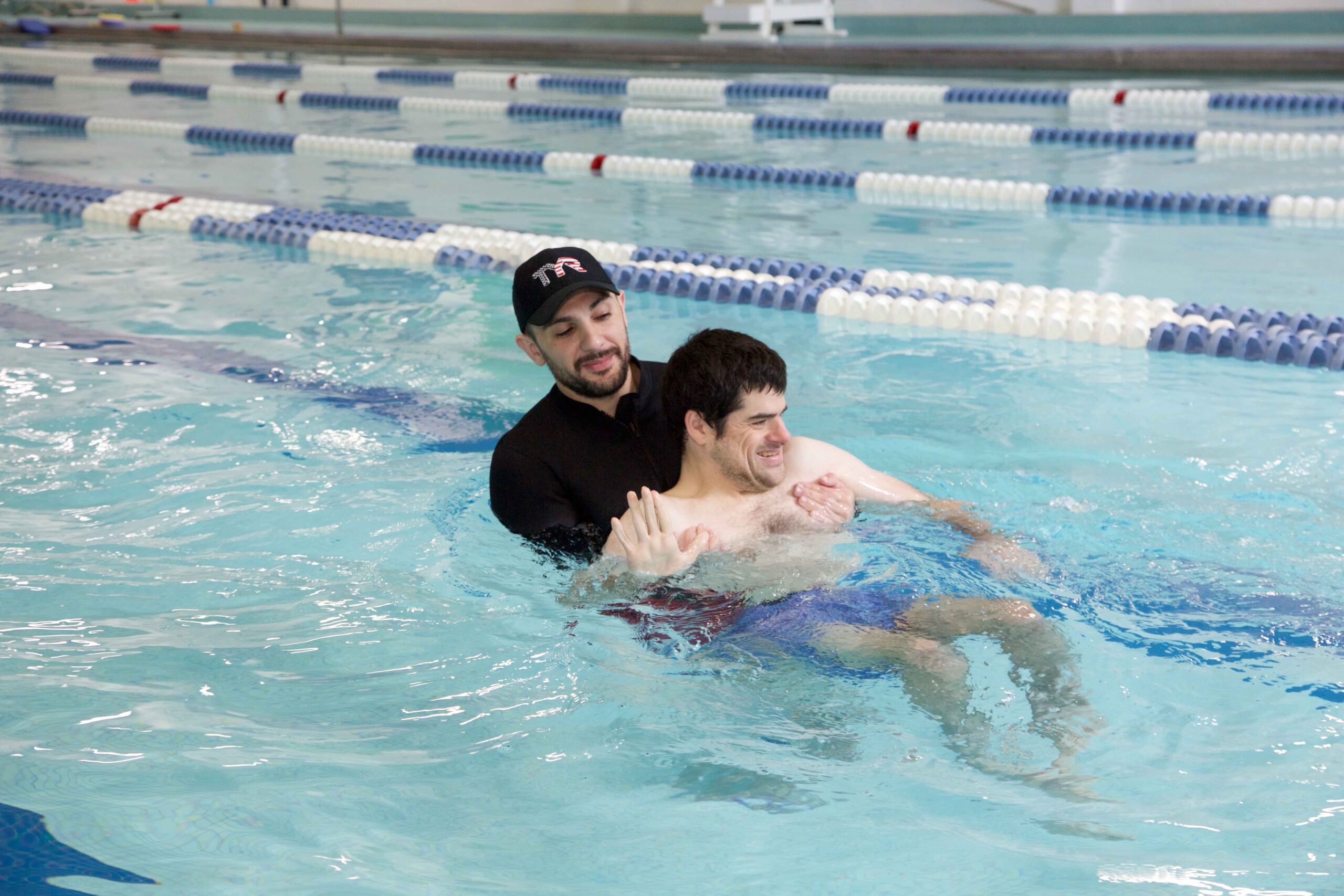
Hydrostatic pressure is the force the water exerts over your entire body the moment you are submerged. The deeper you go, the more this pressure increases. For an instructor, this property is one of your most effective tools for regulation because it creates a profound calming effect—much like getting a firm, 360-degree hug.
The science behind this “hug” is fascinating. The constant, even pressure helps wash away adrenaline and triggers the release of dopamine, which naturally calms the nervous system. This explains why so many of us love being neck-deep in water; it simply feels good. But for a swimmer with a sensory disorder or ADHD—who may always be in motion or struggling to keep their body still—this pressure is a game-changer.
How to Use Hydrostatic Pressure in Swimming Lessons
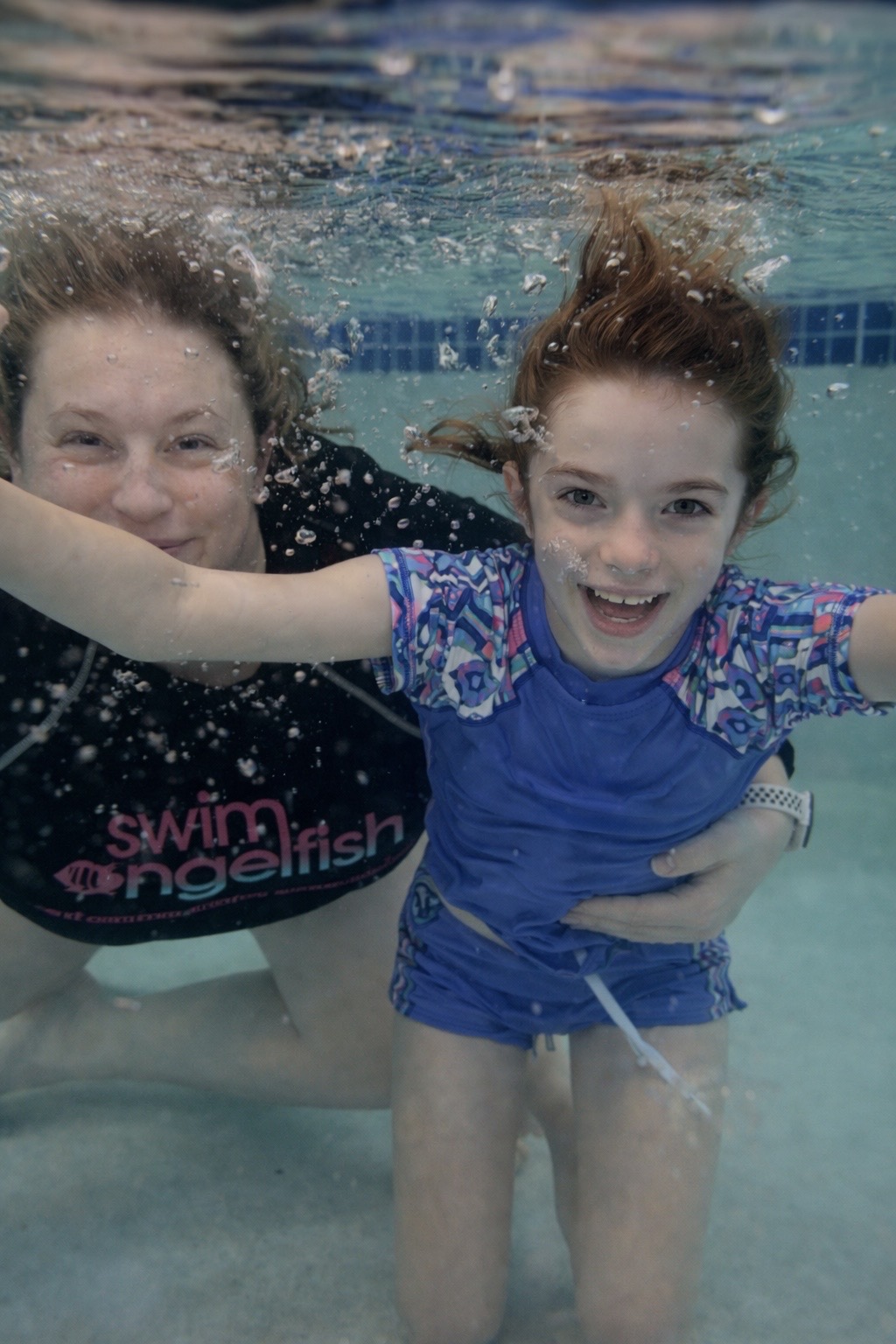
Feeling grounded and calm is important for moving in a controlled, coordinated way. You can use this intentionally by incorporating skills like bobbing, diving for rings, or simply spending time underwater. These activities allow your swimmers to experience increased pressure around their whole body, which helps them find a sense of calm they may not be able to achieve on land.
You can also use hydrostatic pressure to help with emotional regulation and breath control. When your swimmer is submerged, the water exerts pressure around their respiratory muscles. As they surface, that pressure is suddenly released, allowing them to take a deep, satisfying breath. This cycle of “pressure and release” is incredibly regulating and helps your swimmers stay focused and ready to learn.
When you understand how to use this “invisible hug” to ground your students, you aren’t just teaching them to swim—you are helping them regulate their own nervous system.
3. Viscosity: The Gift of Time
Moving in water is often described as moving through “Jell-O” or mud. This thickness is known as viscosity, and your swimmers feel it with every movement they make. For an instructor, viscosity is much more than just resistance; it is a powerful sensory tool that slows down the world and provides constant feedback to the central nervous system.
How to Use Viscosity in Swimming Lessons
One of the greatest ways you can use viscosity intentionally is to help swimmers who struggle with coordination or balance. Think about what happens when someone falls on land: it is nearly instantaneous, leaving almost no time to react. In the water, however, that same motion is slowed down significantly. This “slow-motion” environment gives a swimmer who has trouble figuring out how to coordinate their motor skills, the time they need to process what is happening, react, and regain their balance.
For many individuals with motor issues, fear is a constant companion because they feel they cannot control their own bodies. You can use viscosity as a teaching tool to bridge this gap. Because the “thickness” of the water provides constant input against the skin as you move and it helps the swimmer understand exactly where they are in space.
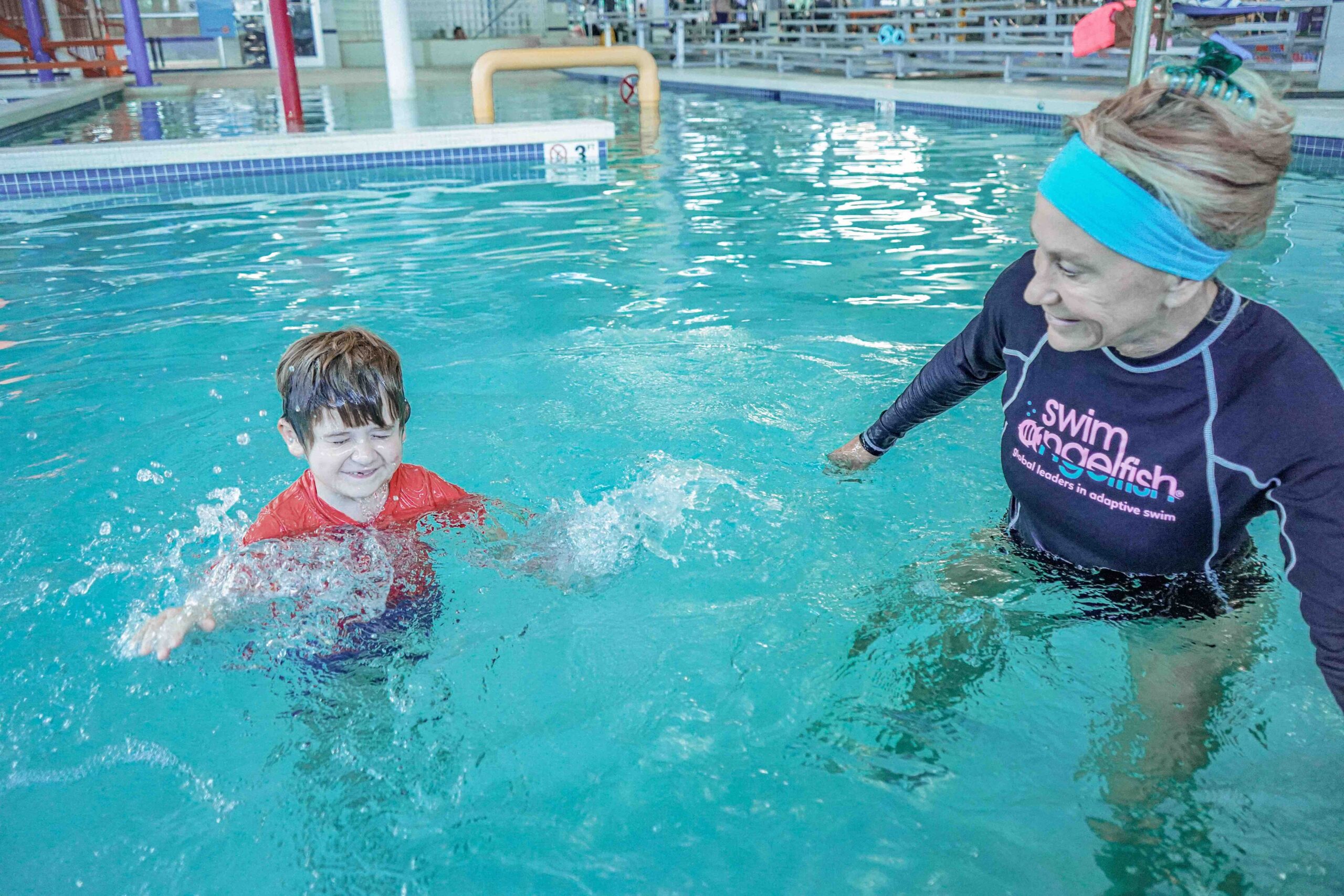
You can apply this property specifically when teaching learn-to-swim skills, such as changing directions or moving from a prone to a vertical position. Viscosity provides the resistance needed for your swimmer to feel the transition and move with more control. The best part? The body control they gain while navigating the viscosity of the pool often carries over to their life outside of the water, helping them manage transitions between different surfaces or positions on land.
When you teach with viscosity in mind, you aren’t just adding resistance—you are giving your swimmers the gift of time and the sensory input they need to finally feel in control.
4. Turbulence: The Invisible Assistant
Turbulence is the irregular motion of the water caused by movement. While it can sometimes be a challenge to balance against, you can use it intentionally to create a “wake” that assists a swimmer in a specific direction. For an instructor, this is a revolutionary tool for fading away physical support and helping a student achieve independence.
The ability to perform a skill without being touched is an important step for swimmers of all abilities to gain independence. Turbulence allows you to guide them through a movement while letting them “motor plan” the action all by themselves. By moving your hands or body in a way that creates a current you can literally pull the swimmer along or help them rotate using the movement of the water.
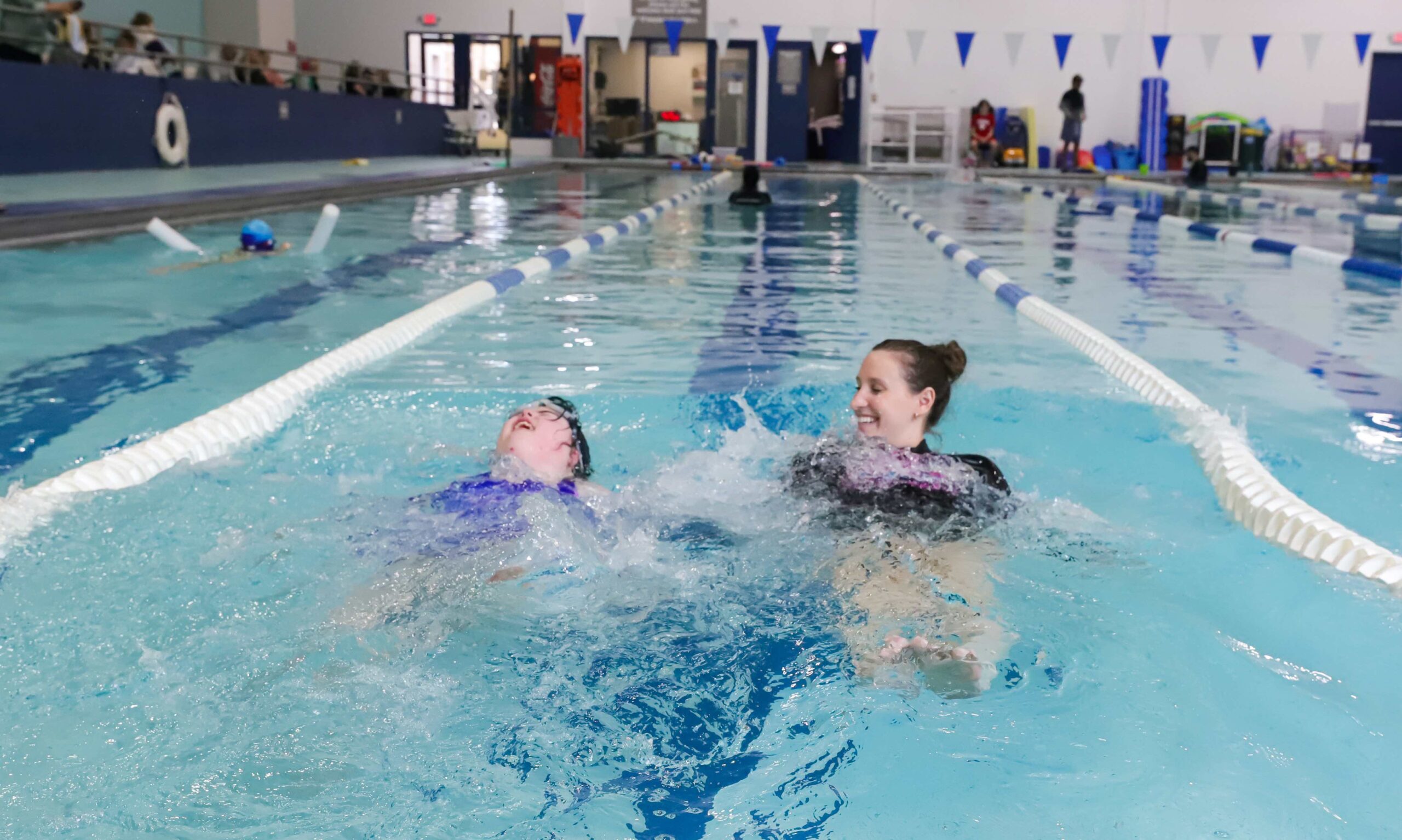
How to Use Turbulence in Swimming Lessons
A perfect example of this is teaching the rollover (moving from belly to back). This is a core water safety skill, but it can be difficult for many to coordinate. Instead of physically turning them, you can create turbulence that assists the roll. This allows the swimmer to perform the skill with greater ease and independence, giving them the “win” of doing it on their own while you provide the invisible assist they need.
Using turbulence in this way transforms you from a physical support into a “director of flow”. When you stop being the one moving the swimmer and start using the water to do the work, you unlock a new level of autonomy for your students.
Transform Your Teaching
Now that you understand these four properties—Buoyancy, Hydrostatic Pressure, Viscosity, and Turbulence—you can move beyond the surface and unlock the true power they provide as a teaching tool and not just an environment you are teaching in!
When you stop relying solely on equipment and start using the water itself more intentionally, you aren’t just teaching strokes—you are navigating the “why” behind your swimmer’s needs. This shift in perspective is what transforms a standard lesson into a breakthrough session.
Ready to bring more science into your swimming? If you want to understand the last two water properties (Surface Tension and Streamline) and dive deeper into understanding the mechanics of aquatic movement and learn specific strategies for overcoming roadblocks, explore our Swim Whisperers® Certification Program.
Join our community of professionals dedicated to mastering the “why” behind the water and unlocking success for every swimmer.