Unlocking Swim Success with Reflex Integration Drills
What if the most persistent struggles you see in your swimmers aren’t technique problems at all, but powerful clues to a foundational movement issue?
As a dedicated swim instructor or coach, you’ve invested significant energy into your students. You observe the swimmer whose legs constantly sink, the one who struggles to glide smoothly through the water, or the freestyler who stops kicking during the breath. You’ve taught every technique correction, yet those movement patterns continue to surface.
This isn’t about a lack of effort or motivation. This persistent resistance comes from Primitive Reflexes—involuntary movement patterns like the ATNR, STNR, and TLR that are overriding your swimmers’ attempts at developing their swim skills.
The solution is not to keep practicing the same drills, it’s all about focusing on integration opportunities so they can stop repeating the same pattern. By teaching movements out of the reflex pattern, you can eliminate that involuntary resistance and unlock amazing fluidity and ease for your swimmers.
Use these specific neuro-based reflex integration activities and drills with your swimmers to unlock their full potential.
Key Takeaways
Overcoming the ATNR Reflex: Swim Drill
The ATNR, often called the “Fencing Position,” is the involuntary link between head turning and limb movement.
The Pattern
When the head turns, the arm and leg on the face side automatically extend (straighten), while the arm and leg on the skull side automatically flex (bend).
How Does this Affect Swimming?
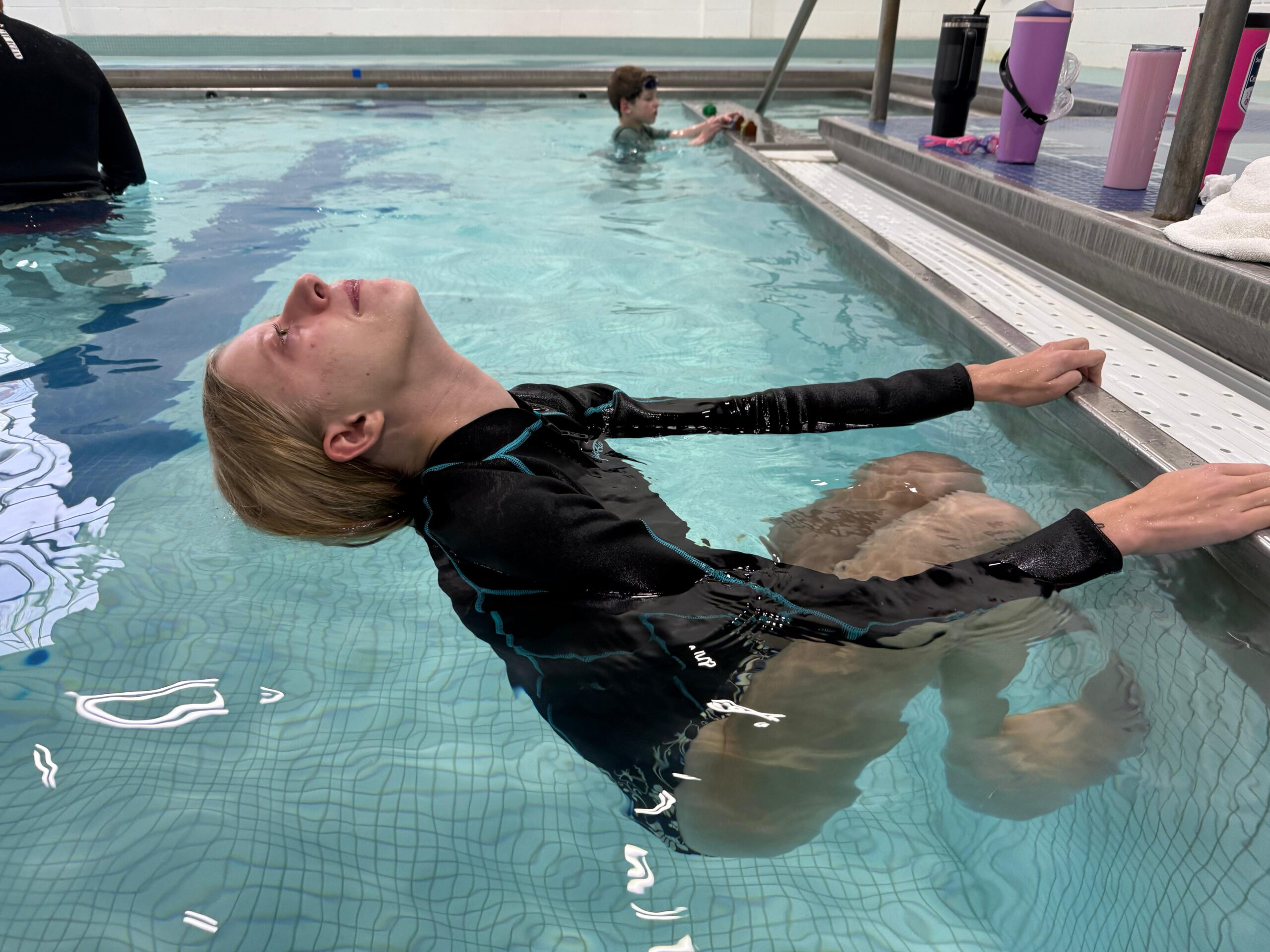
When a swimmer side-breathes in Freestyle and still has a retained ATNR, they often stop consecutive kicking as the arm and leg on the skull side of their body flexes. This disrupts rhythm and efficiency.
The Integration Activity: The Water Horse Drill
Include this freestyle ‘kick-fix’ activity in your swim lesson plan. It is designed to help the swimmer experience movement without the involuntary ATNR pattern taking over.
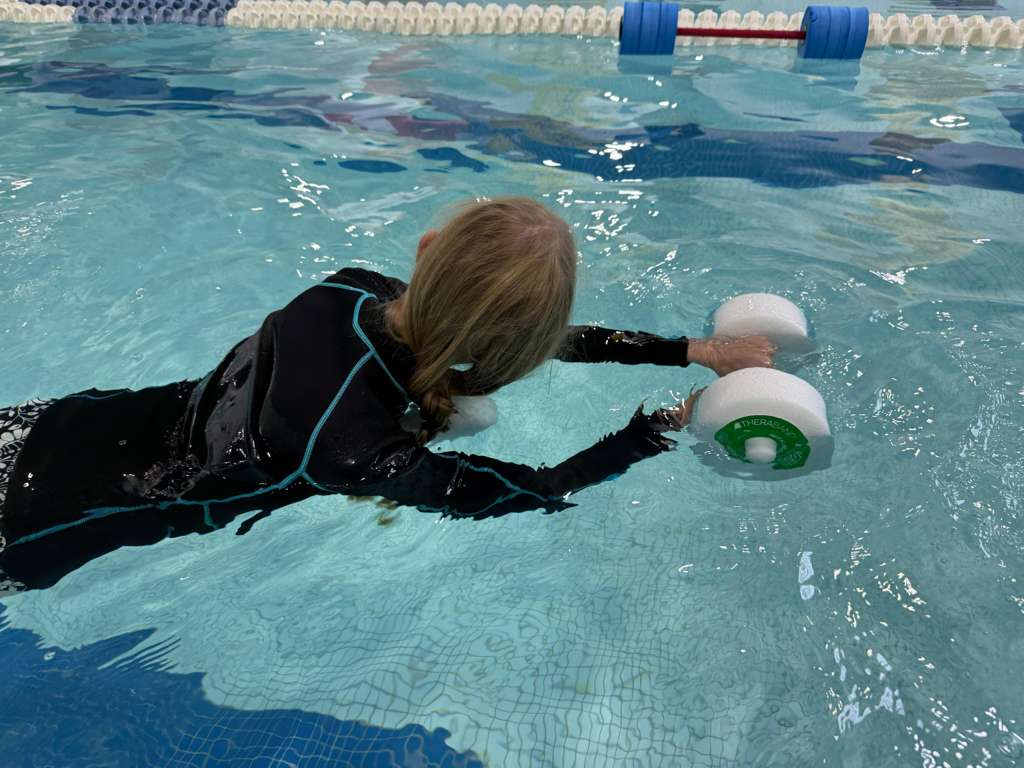
Setup: Have the swimmer sit on a noodle like a horse, positioning the noodle in the middle of their body to establish a strong sense of midline—something that can be tricky with a retained ATNR. Ask or help them move to a prone position, on their stomach.
Equipment: Have the swimmer hold a kickboard or small dumbbell underwater with two hands, keeping both arms straight.
Action: Instruct the swimmer to kick while looking forward (3 kicks), turn their head to the right with their ear in the water (3 kicks), and then turn their head to the left with their ear in the water (3 kicks). Repeat this sequence.
Goal: By holding the equipment with straight arms, the swimmer is forced to resist the reflex that tries to flex the arm on the skull side. This allows them to experience movement without pulling into the ATNR reflex.
Follow-Up: Make sure to fade away the equipment and have the swimmer try Freestyle to see the immediate carryover effect.
Watch the Principles of This Reflex Integration in Action
See a demonstration of what a retained reflex can look like in the water and how simple integration activities can create instant, visible change in a swimmer’s kick and stability.
You can use swim drills based on neurochemistry to help re-pattern retained reflexes, improve ways of processing and body control to set up all swimmers for success with these helpful tips.
What About the Swimmer Whose Legs Sink? Addressing the STNR Reflex
The STNR (Symmetrical Tonic Neck Reflex) is the involuntary link between the position of the head (up or down) and the extension or flexion of the arms and legs.
How Does this Affect Swimming?
This reflex is often responsible for the notorious “bicycle kick” and the swimmer who struggles to maintain a horizontal body position. When they lift their head to breathe or look forward, the STNR can cause the legs to flex and drop, fighting against your best efforts to teach streamline position.
The Integration Solution: Swim Drill Discovery
We use a specialized drill that encourages the swimmer to maintain an integrated streamline position (arms flexed, legs extended) while the head is extended—the exact opposite of the STNR pattern.
Why It Works: This drill re-patterns the brain to decouple head movement from the leg response. It creates a new, integrated muscle memory, leading to immediate, visible improvement in the swimmer’s horizontal body position.
This neuro-based exercise is featured in our Splashing Into Reflexes online course and is included in Swim Whisperers® Level 1 as part of our material for the 6th Roadblock; ‘Having Body & Breath Control”.
Improving Stability for Dives and Backstroke: The TLR Reflex
The TLR (Tonic Labyrinthine Reflex), or “Gravity Reflex,” affects balance and the ability to separate head movement from body movement.
How Does this Affect Swimming?
If a swimmer has a retained TLR, they may struggle with starting dives (falling forward too soon) or they may arch their back excessively when doing Backstroke, causing water to rush uncomfortably over their face. Their body is unable to stabilize when the head moves, affecting core stability.
The Integration Solution: Swim Drill Discovery
Our technique teaches the brain to separate head movement from body movement. We use a simple, yet powerful, pool-side activity that encourages the swimmer to maintain a stable, flexed body while deliberately isolating only head movement.
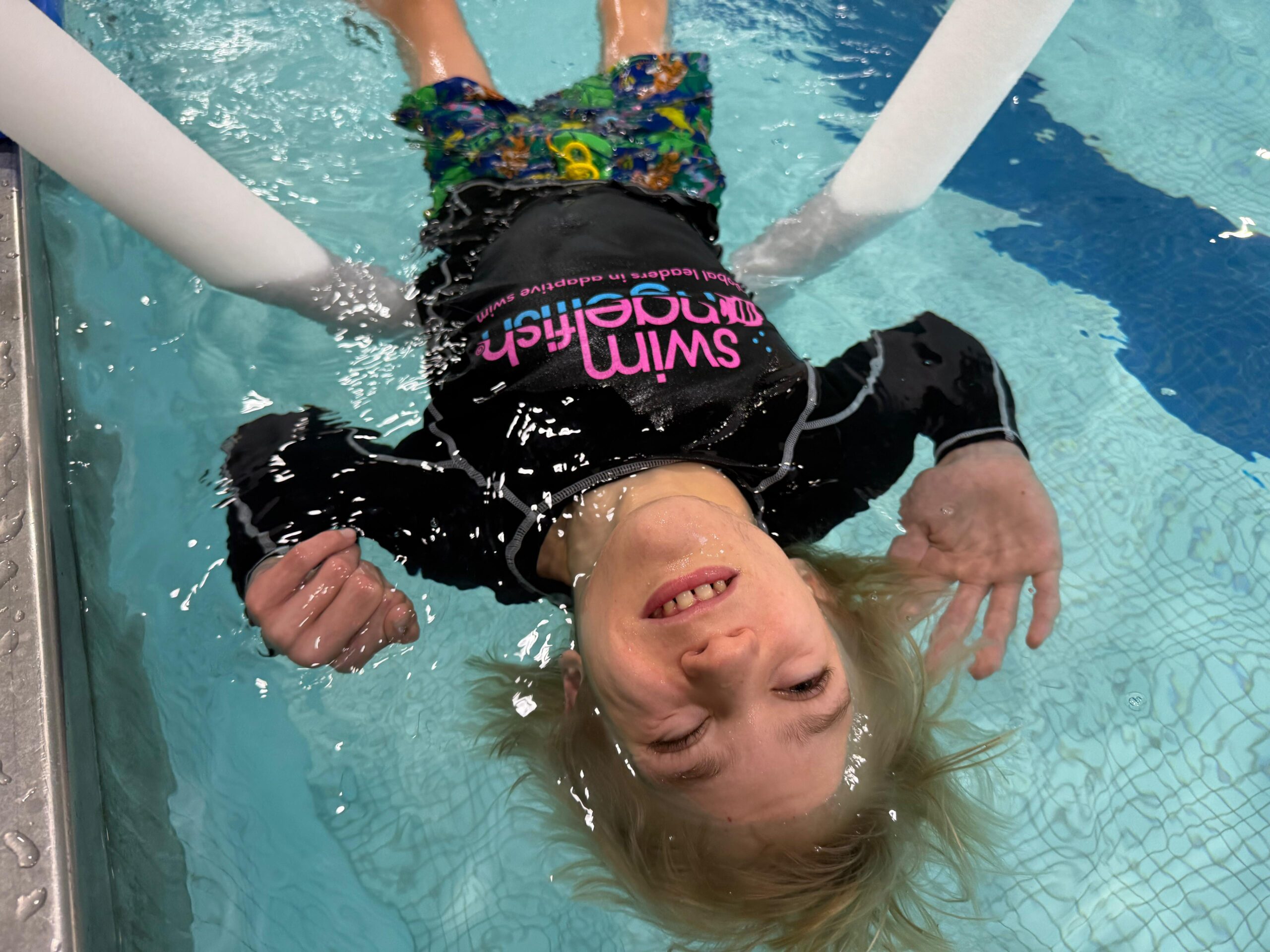
Why It Works: This exercise targets the connection between the head and the body, teaching the brain to hold the body position while the head moves. This eliminates the reflexive ‘arching/flexing’, leading to improved stability and control – which is needed for skills like backstroke and diving.
Want the full steps for this transformative drill? This neuro-based exercise is featured in the Splashing Into Reflexes online course and is included in Swim Whisperers® Level 1 as part of our material for the 6th Roadblock; ‘Having Body & Breath Control”.
How Reflex Patterns Impact Swim Skills
In this video, we highlight swimmers demonstrating ATNR, STNR, and TLR reflexes and show the specific drills we use to help integrate each one. These quick visuals make it easier to spot reflex-driven movements and apply corrective techniques during your own adaptive swim sessions.
As these concepts come together, it becomes clear that effective progress starts with addressing the underlying systems that drive movement.
Now you understand how to address the root cause of your swimmers’ struggles. By focusing on reflex integration in your lesson plan, you are not just teaching a swim stroke—you are helping to build a more efficient, coordinated movement foundation.
Want to dive deeper right now? You don’t have to wait! Take a deep dive into common primitive reflexes with the “Splashing Into Reflexes” 2-hour online course and unlock the aquatic potential of your therapy clients or swimmers.
Take the Swim Whisperers® Certification Course and learn how to teach swimmers of all abilities. Transform your skills and their progress with our online training that empowers you with therapy-based knowledge to help your swimmers succeed.