Helping Swimmers Thrive: Behavior Management in Group Classes

Are you wondering how to manage a swimmer who comes to your typical learn-to-swim class but has behavior needs? How do we help swimmers with adaptive needs be more successful within existing group swim classes?
Managing behavior in small group swim classes can be challenging—especially when swimmers have different attention levels, learning styles, and sensory needs. Add sensory-seeking behaviors like constant movement, splashing, or going underwater, and it can feel difficult to follow your swim plan or reach skill benchmarks in traditional ways.
In many group swim lessons, multiple needs coexist at the same time. This is where effective behavior management in swim lessons becomes essential—not to control swimmers, but to support safety, engagement, and progress for the entire group.
If sensory sensitivities or seeking behaviors are interrupting your class flow, it may be time to adjust your approach. The good news? There are practical strategies that work—and you’re not alone in learning them.
Why Learning Behavior Management Skills Matters
Learning behavior management skills is one of the most powerful tools a swim instructor can develop. When instructors understand why certain behaviors are happening, they can respond proactively instead of reactively—keeping swimmers engaged, safe, and learning together.
The strategies shared in this blog are rooted in behavioral theory, sensory integration principles, and motor learning concepts. They are informed by the professional training of the co-founders of Swim Angelfish, who are Occupational and Physical Therapists, as well as their combined years of experience working with swimmers of all abilities.
From a therapeutic lens, behavior is a form of communication. Movement, splashing, or difficulty waiting often signal a need for sensory input, regulation, or predictability—not defiance or lack of motivation. When instructors apply behavior management strategies that support regulation and choice, swimmers are better able to participate in group activities and make meaningful skill progress.
In swim lessons, behavior management is about proactively structuring the class to support safety, engagement, and skill development—not discipline or punishment. By blending evidence-based behavioral principles with real-world swim instruction, instructors can create what we call “structured chaos”—a learning environment that allows flexibility within clear boundaries so every swimmer can work toward the same goal in their own way.
Practical Tips for Group Swim Classes
Managing four or more swimmers in a typical learn-to-swim class already comes with challenges due to varying attention spans and interests.
Have you experienced even more obstacles when some swimmers display sensory-seeking behaviors—constantly going underwater, splashing, or moving their bodies in ways that make it difficult to follow your swim plan or reach skill benchmarks using traditional teaching methods?
In small group swim classes, many different needs often coexist in the same lesson. This is where behavior management in swim lessons becomes essential—not to control swimmers, but to support participation, safety, and progress for the whole group.

If you find yourself managing more sensory sensitivities and sometimes challenging seeking behaviors, this blog will provide immediate strategies you can try in your next class.
When seeking behaviors begin interrupting your swim curriculum, it’s time to change your approach.
Remember—you are not alone. With growing statistics around ADHD, autism, and learning differences, swim instructors everywhere need more support with inclusive behavior management strategies.
Swimmers have different goals, learning styles, and sensory needs, and managing this in a group setting can feel frustrating.
Let’s dive into this video to see how everyone can work on the same swim skill in different ways—and how to manage this using what we call “structured chaos.”
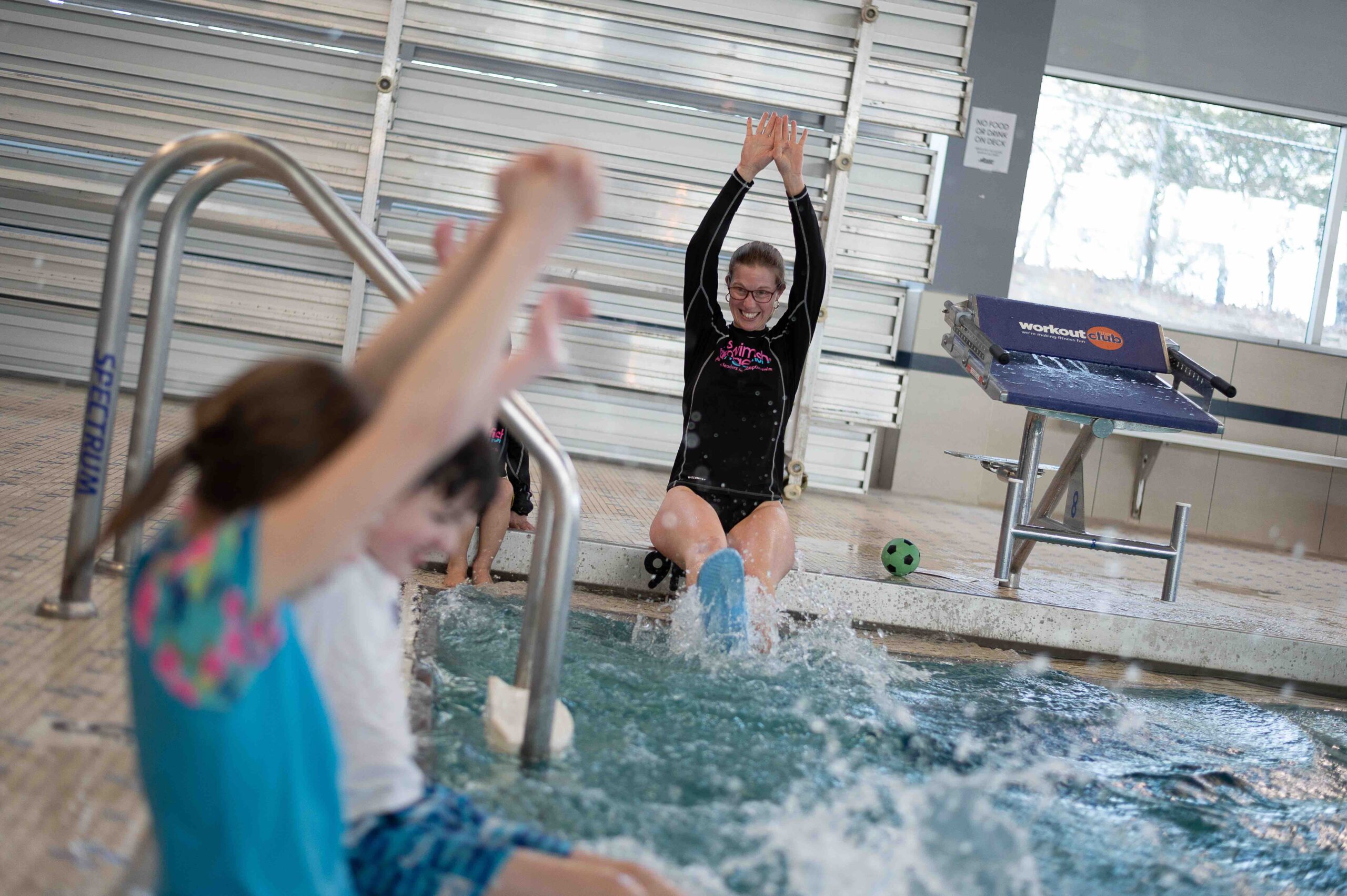
Yes, that’s right. It may look like your group is not paying attention, when in fact you are allowing creative drills that promote self-regulation, structure, and optimal participation. Sometimes, side-by-side drills—where all four swimmers move at the same time—are the most effective way to maintain safety while supporting swim skill progression.
3 Behavior Management Strategies for Small Group Swim Lessons
Here are three behavior management tips for swim instructors that can improve participation and reduce disruption in group swim classes:
1. Pacing: More Movement, Less Waiting
Offer more movement and less wait time. One of the most effective behavior management strategies in swim lessons is faster pacing of your activities and decreasing the amount of time required to be still and wait!
These activities can leave both swimmers and instructors with a more positive outlook for the rest of the lesson.
2. Creativity: Choose Humor Over Restarting the Drill
Choose humor over restarting a drill that has gone “South” or off-plan.
Watch how an adaptive swim instructor acts surprised when swimmers don’t wait to start together—and then allows them to continue instead of restarting the race. This approach supports self-regulation while helping swimmers meet their sensory needs.
Allowing the drill to continue helps:

To learn more about the underlying obstacles that affect learning to swim, professional training can help instructors build confidence in addressing these unique needs within group swim lessons.
3. Equipment: Flexible Use to Support Regulation and Cooperation
Swimmers may use equipment in unexpected ways—and that flexibility can be a powerful behavior management tool.
For example, you might offer flippers, barbells, noodles, or hand floats and allow swimmers to choose how they use them for a lap across the pool. A swimmer might put flippers on their hands instead of their feet.
Our first instinct may be to say, “That’s not how you’re supposed to use them.” But think outside the box.
Ask yourself:
In this example, by allowing the swimmer to use the flippers on their hands briefly—and then transitioning them to their feet for the next lap—you still reach the swim skill goal while maintaining group flow and cooperation.
Sometimes, allowing choice first leads to better compliance later.
How do I Keep Group Swim Lessons Safe with Behavior Challenges?
Safety and structure go hand-in-hand when managing behavior in small group swim classes. Clear expectations (TIP: Use a visual schedule) help swimmers know what’s coming next, which reduces frustration and keeps everyone engaged. A few simple strategies can make a big difference:
By combining predictability with guided freedom, you can maintain safety, promote participation, and keep your class running smoothly—even when behaviors get a little lively.
Behavior Management Is About Belonging
All swimmers crave social interaction, though it may look different for swimmers with adaptive needs. Using the strategies in this blog—along with flexibility and humor—can significantly improve the flow of your next small group swim class.
Many parents of swimmers with ADHD, autism, and sensory challenges prefer social learning environments such as semi-private or small group lessons when instructors understand how to engage swimmers in these unique ways.
Behavior management isn’t about control—it’s about creating a safe, inclusive space where every swimmer can participate and progress.